Of Imbolc days and tea.
It was a cold February day in 2017. Rain had fallen without pause since morning, soaking the world in a quiet persistence that seemed almost intentional. Raven and Hemanth had come over to the apartment where Mystique and I lived. I had prepared lunch—kebabs, biryani, and a simple salad—comforting, grounding things against the damp heaviness outside.After we ate, we gathered in my room, talking idly, waiting for the rain to relent. But it did not. The sky deepened into a strange orange hue, as though the world had been veiled in an unseen filter. It was hauntingly beautiful—unnatural, yet deeply calming.
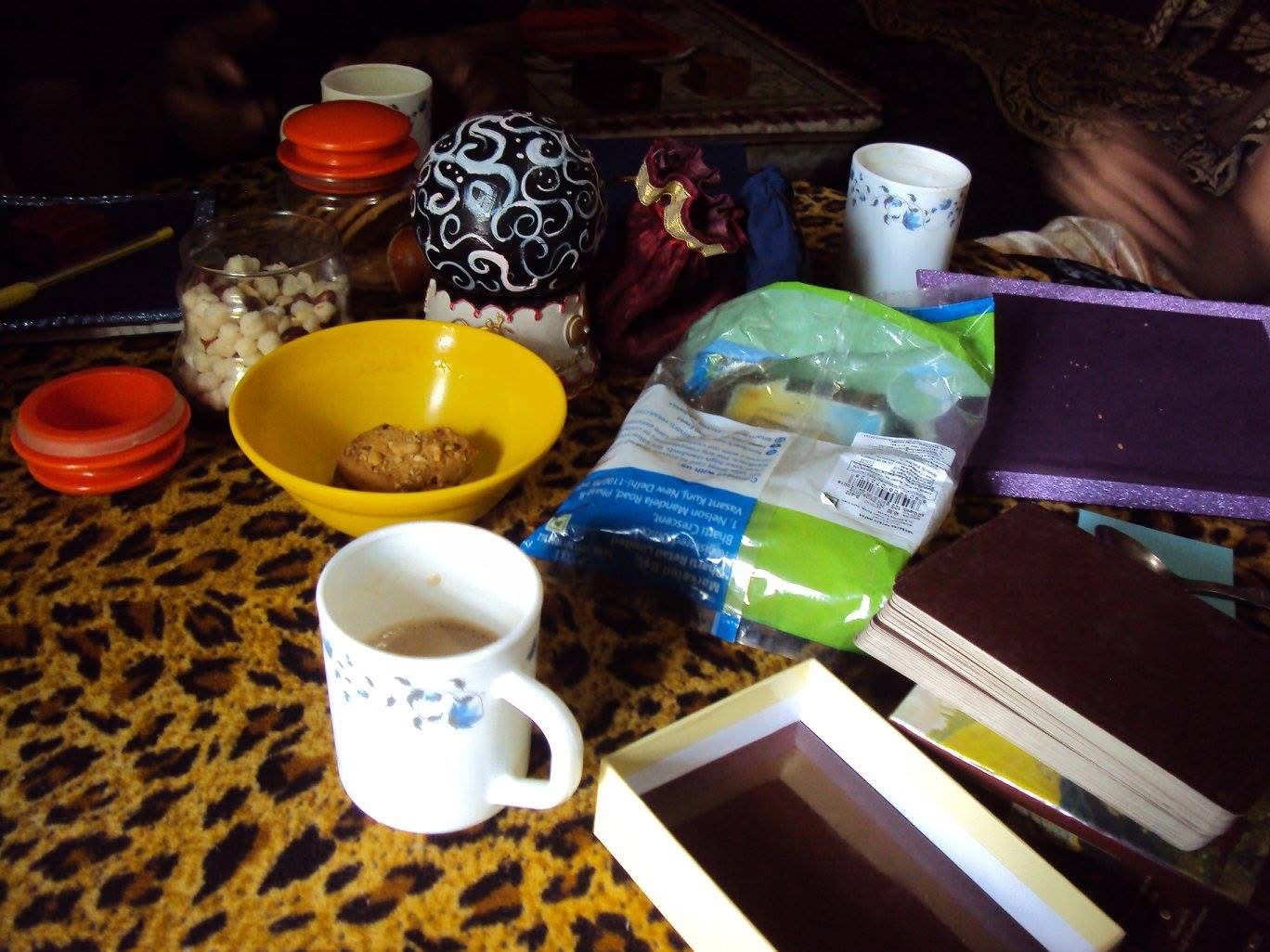
Mystique, with her quiet precision, prepared tea for us. She had a way with it—an attentiveness to proportion and timing that felt almost ritualistic. The black tea she brewed carried a distinct quality: it soothed the senses, softened the mind, and invited a kind of inward stillness. Whether it was her method, the leaves themselves from the distant gardens of Assam, or something unspoken that she carried within her, I could never quite tell. But as the minutes passed, the tea seemed to deepen in its effect, as though it unfolded layers within us. We often served that tea to those who came seeking healing. It was not just a beverage to us—it was a medium, almost sacred. We guarded it carefully, along with the other tools we used, as if preserving something fragile yet potent.
That evening, as we sat together—tea in hand, the soft clink of cups against saucers, the faint rustle of rain easing outside—I felt something shift. A presence, subtle yet undeniable, seemed to enter the room. Not just I, but everyone sensed it. The air grew dense, touched by an inexplicable heaviness, as though an unseen gaze had settled upon us. Time slowed.
And then, just as quietly as it had come, it began to fade. When the rain finally stopped and the sky cleared, so did our minds. The weight lifted, leaving behind only a trace—a memory, or perhaps a question. It felt as though whatever had passed through had done so without disturbance, completing something unseen, or simply moving on.
I have often wondered about that moment. Some suggest that shifts in the atmosphere—electrical currents heightened by rain and cloud—can thin the boundary between worlds, making such presences perceptible. Perhaps that was all it was. Or perhaps it was something else entirely. There was, for a fleeting instant, a sense of a story—unspoken, hovering at the edge of awareness. I felt it, almost understood it… and yet chose to let it remain where it belonged.
Not everything that is sensed is meant to be told.
That year, our discussions often circled around Manas Bhavishyaphal—the subtle art of reading time through the lens of devotion and cosmic rhythm. One evening, we chose a chaupai and let its meaning unfold within us:
तेहि देहि गति राम उधारा।
शबरी के आश्रम पग धारा॥
शबरी देखि राम गृह आए।
मुनि के बचन समुझि हिय भाए॥
It was never merely recitation—it was contemplation. Each word held a vibration, each line a quiet संकेत.
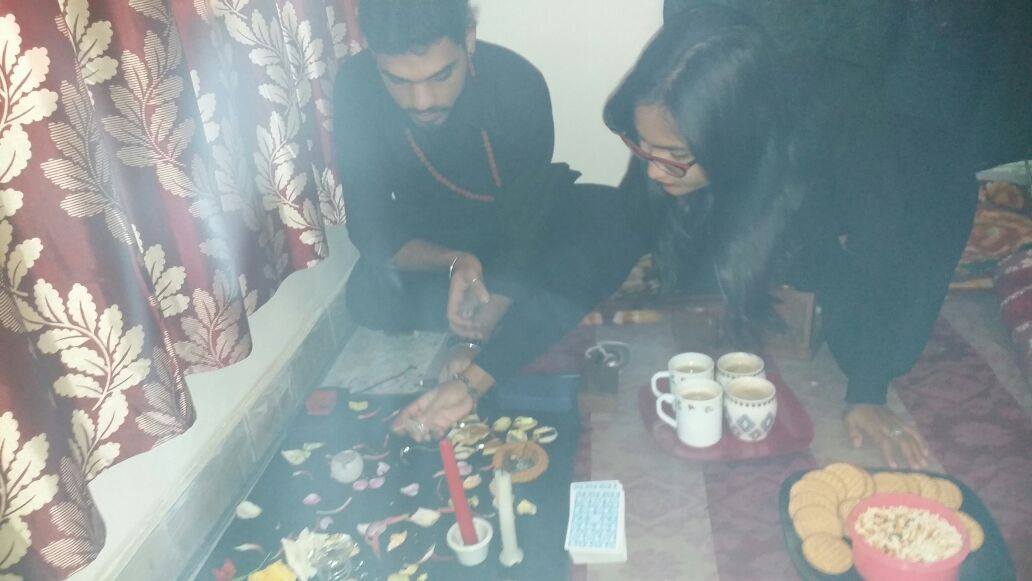
I found myself guiding them into the language of astrology—not as a rigid system of prediction, but as a way of perceiving patterns. Though Wiccans, by nature, refrain from binding themselves to the idea of a fixed future—believing instead in the transformative power of the present—I introduced astrology as a bridge. A way to sense how existence moves in cycles, how the cosmos breathes through planetary rhythms, and how, if one listens carefully, the unknown begins to whisper through the known. We studied charts, not to control destiny, but to question it. To test whether the stars merely suggest—or truly speak. Alongside this, tarot became another doorway, another symbolic language through which intuition could take form.
I remember those afternoons in the garden—February sunlight falling gently upon us, a fragile warmth against the biting cold. It felt as if the light itself was melting something deep within the bones. The winter that year was particularly harsh, yet those moments carried a strange comfort, as though we were held between two worlds—cold and warmth, certainty and mystery. That year, more than anything, became a year of journeys.
Of Wiccan Excursion.
The initiates had never experienced the silent majesty of the hills, nor the deeper currents of Tantra that flow through them. So we chose to travel—to step beyond books and rituals, and into places where energy is not studied, but felt. Our destination was the revered Jwala Devi Temple—one of the sacred Shakti Peethas, steeped in legend and devotion. It is said that the tongue of Sati fell there, and that eternal flames have burned ever since, without any visible source of fuel. I have always been a skeptic at heart. I search for reason, for structure, for explanations that the mind can hold. And yet… there are moments when experience quietly transcends logic. Standing there, in the lap of the Himalayas, I felt something undeniable—a presence, an intensity, a current of energy that could not be easily dismissed. The temple itself stood ancient and resolute, while the flames—blue and orange—flickered with an almost conscious grace.
Hemanth had joined us on what we fondly called our Wiccan excursion. Around us were many sadhaks and tantriks, each absorbed in their own practices. And yet, a question lingered within me—how many truly sought, and how many merely performed? In a world where religion often becomes spectacle, where devotion is commercialized, the line between authenticity and illusion grows thin.
Still, the place held its power—independent of all human projections.
As I write this now, it brings back another chaupai we reflected upon during a later session in 2019, one that seemed to echo the very essence of Jwala:
उठी उदधि उर अंतर ज्वाला।
संधानेउ प्रभु बिषिख कराला॥
देवि पूजि पद कमल तुम्हारे।
सुर नर मुनि सब होहि सुखारे॥
There is something timeless about these verses. They do not merely belong to scripture—they arise in moments, in places, in experiences. Like the flame at Jwala, they continue to burn—quietly, steadily—within those who are willing to feel. These places of power were never meant to be mere destinations—they were catalysts, meant to awaken the inner fire within us. As I touched the ancient walls of the temple, and later the eternal flames themselves, I felt something move through me—subtle, yet undeniable. It was not imagination. My mind, by nature, resists illusion. And yet, what I experienced there did not ask for belief; it simply was.
Draped in black, the four of us stood in quiet receptivity. There was a fierceness in the air—a raw, untamed शक्ति (power). For a fleeting moment, it felt as though we were standing in the presence of Goddess Kali herself—not in form, but in essence. In the distance, I began to hear the sounds—bells, conch shells, drums. At first faint, almost like an echo carried by the wind, but as we deepened into meditation, the sounds grew stronger, more insistent, as though responding to our stillness rather than interrupting it.
And yet, not all that surrounded us carried the same depth. To one side of the temple, a group of women had gathered—hair untied, bodies swaying, heads rotating in exaggerated motion, claiming to embody the divine. There was something almost theatrical about it. Having studied the workings of the mind through Wiccan practice, I could see beyond the surface. These were not moments of possession, but of expression—perhaps born from years of suppression. Women unheard, unseen, or diminished in their daily lives, finding in these acts a fleeting sense of power, of recognition.
It did not anger me. If anything, it revealed a quiet truth about human nature—how deeply we all seek to be acknowledged.
Their प्रदर्शन (performance) stood in stark contrast to the silent intensity we had felt moments before.
That memory brings me, unexpectedly, to my mother. She has always been a woman of sharp clarity—skeptical, grounded, and fiercely practical. She once shared an incident from her days as a school teacher. Whenever a girl attempted to mimic such behaviors—claiming possession or divine influence—my mother would respond not with reverence, but with a firm slap and a dose of ridicule. Harsh, perhaps, but effective. The behavior never repeated.
There was no space for illusion in her world. And I often feel that whatever strength of discernment I carry—the ability to question, to not be easily swayed—I have inherited from her.
When I look at parenting in places like Canada today, I cannot help but notice the contrast. There is care, yes—but often without the balance of discipline. Children are protected from discomfort, from hardship, from the very forces that build resilience. But to face life fully, one must know both softness and harshness.
Raven and Mystique would often joke that if they ever had children, they would send them to me instead of school. I would laugh—but somewhere within, I knew what they meant.
Education, to me, was never confined to classrooms. It was meant to be lived. I would have taught them languages—not just to speak, but to think differently. Ancient arts—to connect with lineage. Physical discipline—to ground the body. And alongside it, calculus and advanced sciences—to sharpen the intellect and expand perception.
Though, I must admit—when it came to mathematics, I would gladly hand them over to Mystique. Some disciplines require a different kind of mind, and she carried that precision effortlessly. In the end, perhaps that is what we were all seeking—in temples, in teachings, in each other.
Not just knowledge. But transformation.
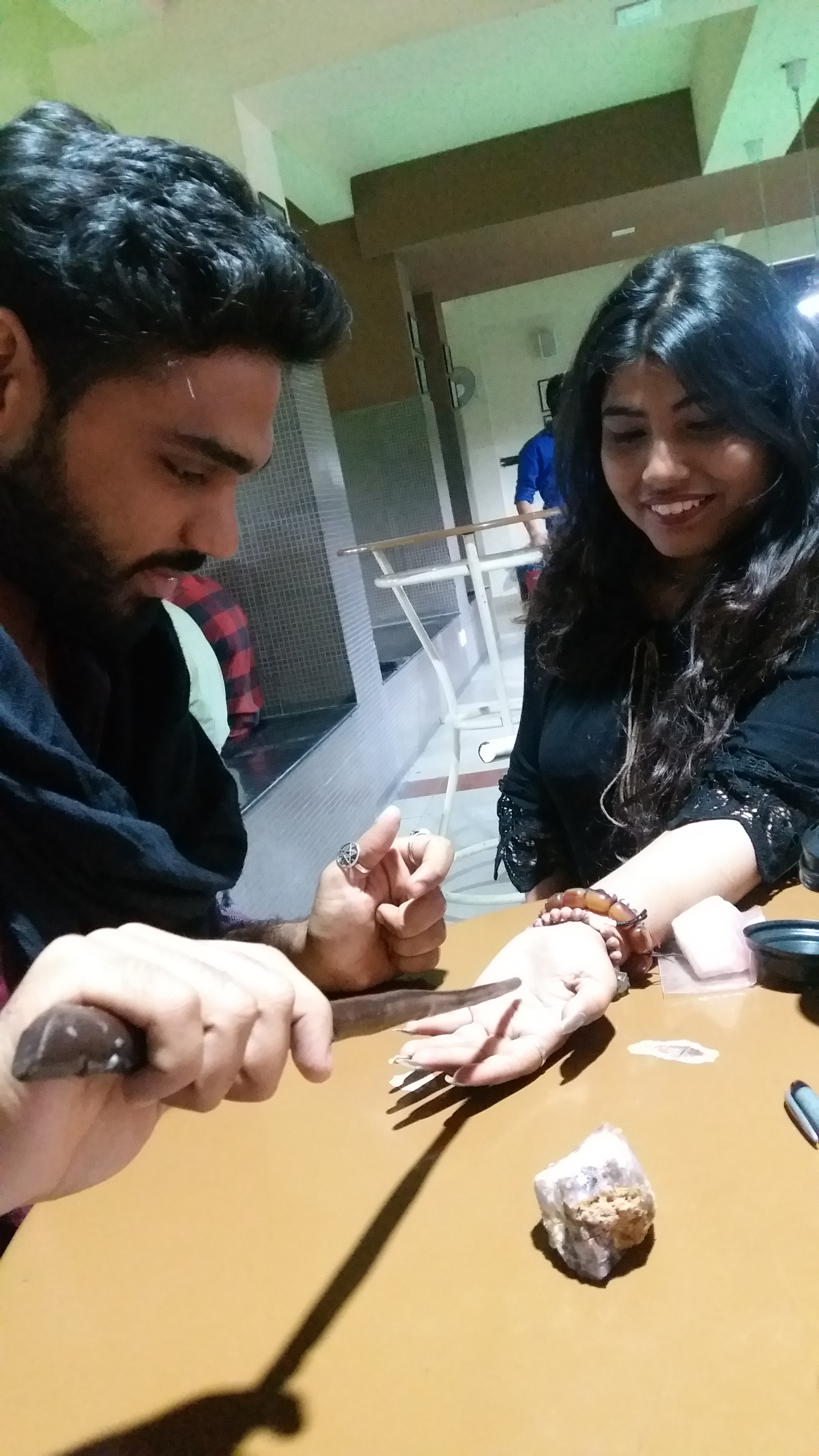
It was getting dark by the time we returned from the temple, yet none of us felt tired. Instead, there was a soft, glowing energy within us, as if something inside had been quietly lit and was still burning. The air felt lighter, our steps slower, and a calm excitement moved between us without words.
The Spring Sessions.
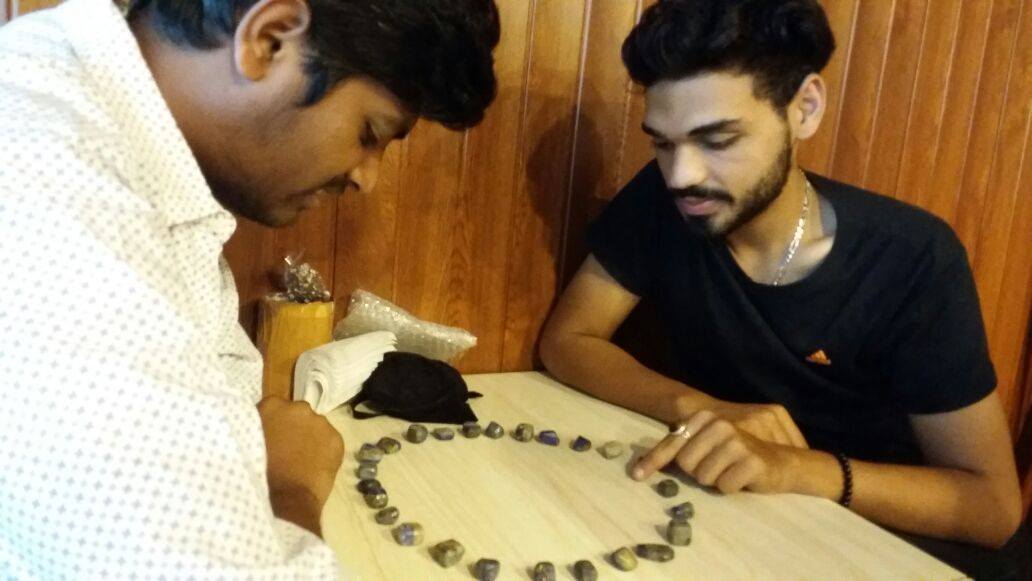
In those days, we had created a small ritual of our own.Instead of sitting inside the Cue Lounge—our usual place—we started spending more time in the garden outside. Every evening, almost at the same time, we would sit there. It became so regular that the café staff began saving those seats for us without asking. Sometimes, no one else would even sit there, as if the place had become ours. People began to notice us.
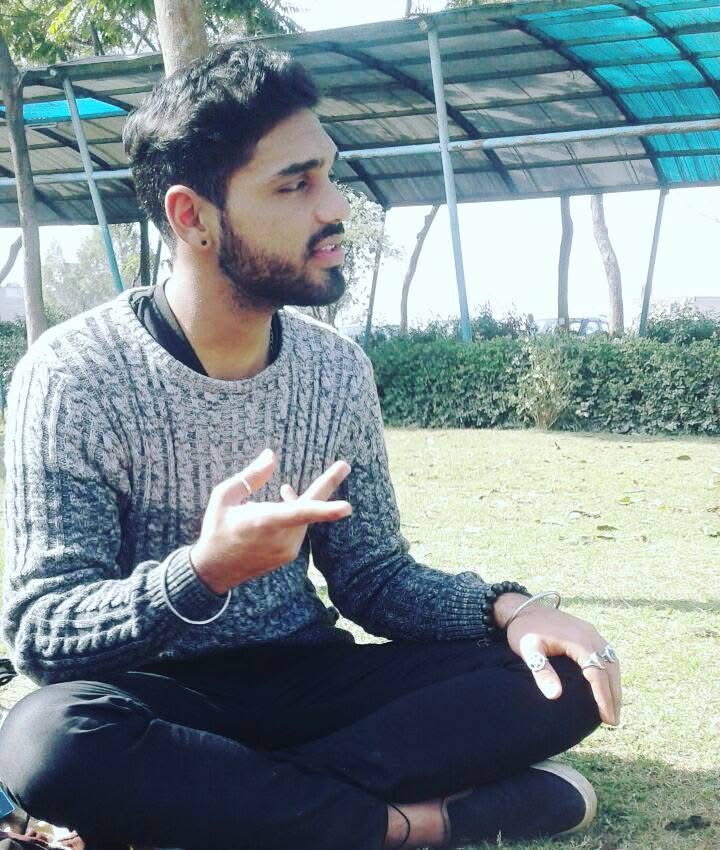
At first, they came slowly, a little unsure. Then they started opening up. Some spoke about broken relationships, some about career worries, and many came with questions about love, loyalty, and trust. We listened to them. Sometimes we helped. But not always. I was careful about that. I didn’t want the initiates to become fortune tellers, telling people what would happen and making them dependent. What I tried to teach them was deeper—the philosophy of Wicca. Words, when spoken with care and honesty, can heal. They can calm a troubled mind and give strength to someone who feels lost. Still… there was always a slight darkness in it. Not something bad, just something present—like a shadow that quietly exists beside the light.
That year—2017—though I didn’t realize it then, was also the last semester of Anaad.
By that time, something strange had started to grow between us. Not through talking, but just through presence. He came to the café every day. Always alone. Always quiet. He would walk in with a small bag, dressed simply, almost as if he didn’t want attention. Then he would play snooker for hours. By then, he had become very good at it. There was a calm focus in the way he played, as if nothing else around him mattered. And yet, sometimes… he would look at us. Not directly. Not for long. But enough to be noticed.
His eyes seemed to carry questions. Curiosity. And something softer… maybe a kind of attraction, or a feeling of knowing. We never spoke to him. Not even once. But still, his presence became a part of our daily life. I often wondered about him. Was there some connection from the past? Something unfinished? Or was it just destiny, quietly placing him there for a reason we didn’t yet understand? There were no clear answers. Only a feeling. When he was there, you could sense him without even looking. And when he was not, something felt missing—like a small part of the space had gone empty. He never spoke to anyone. He would just come, play, look sometimes, and leave. And somehow, without saying a single word, he had already become a part of our story.
Of Power, politics and Wiccan Altar
On some weekends, I would go back home and stay with my parents. It was not just for rest, but also to reconnect—with myself, and with my tools. There was a quiet rhythm to those visits.
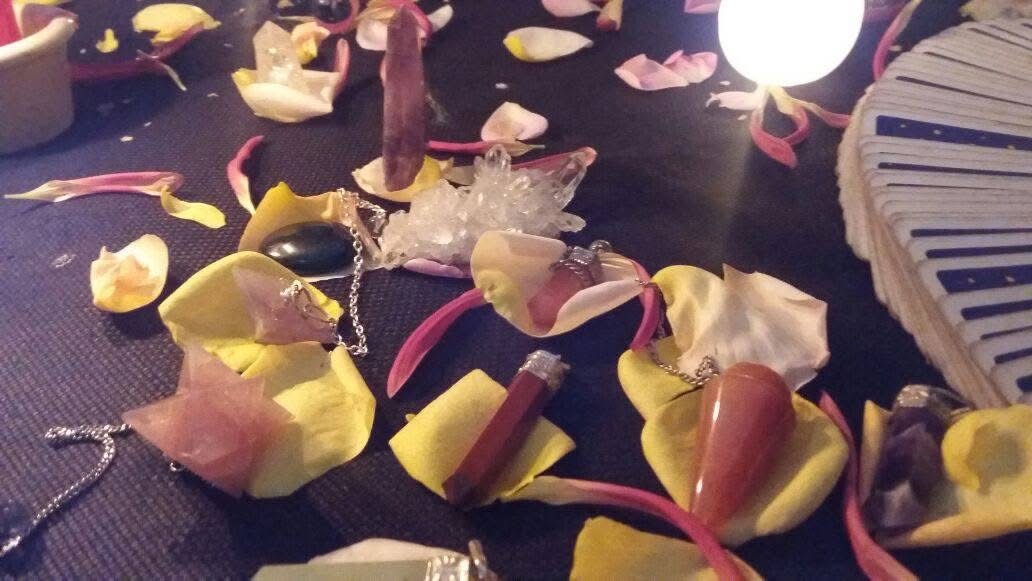
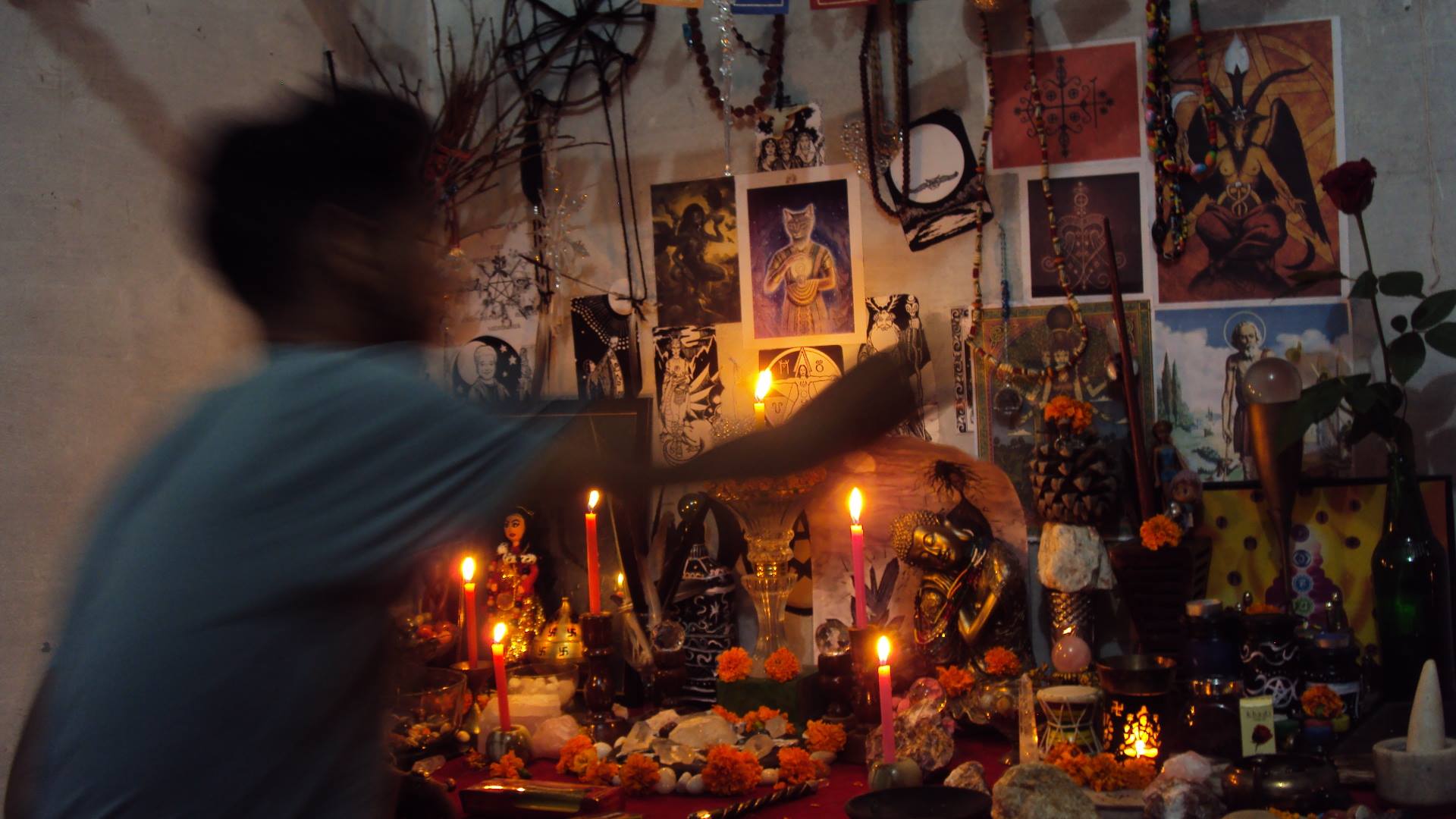
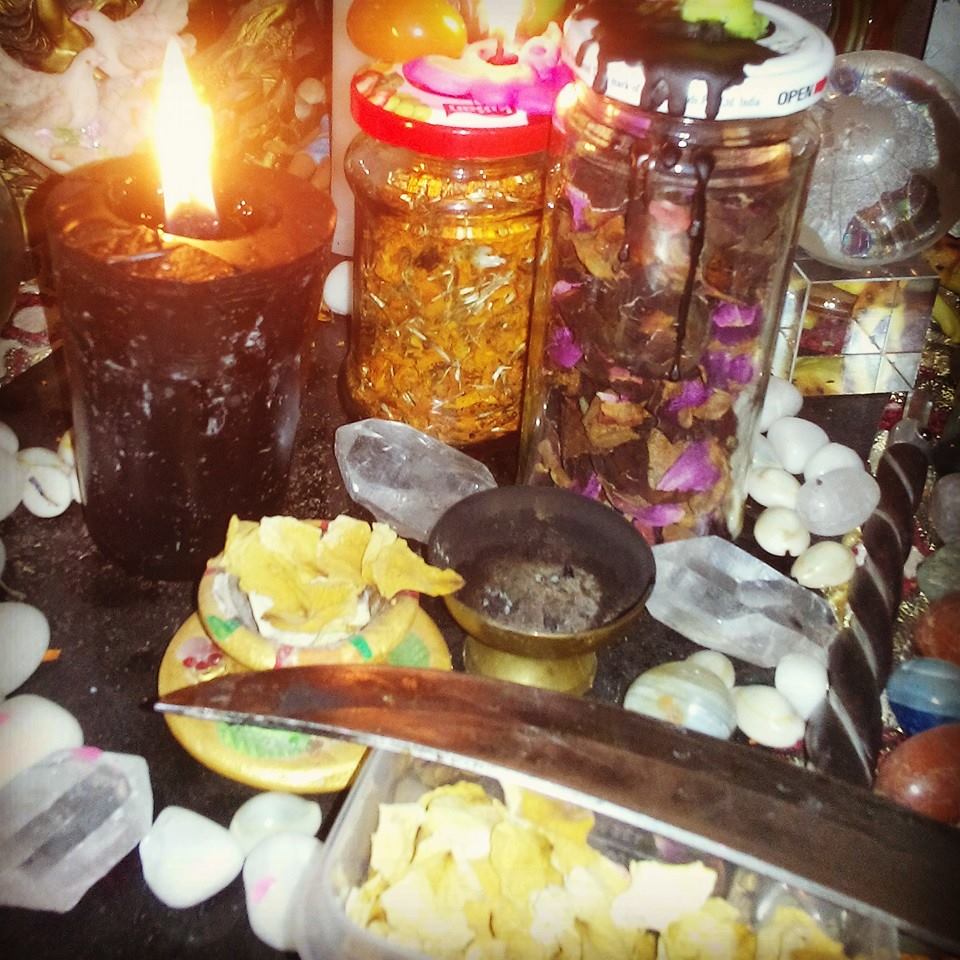
In the room next to mine, stood the altar, a space that had been with me since childhood. It had grown over the years, slowly, almost like a living thing. I would light the candles, one by one, and sit before it in silence. As the flames flickered, the crystals placed around—quartz, amethyst, jade, citrine—would catch the light and begin to shimmer softly. There was a certain stillness in those moments. I would place the athame—a ceremonial, blunt blade used in Wiccan rituals—on the altar with care. Fresh roses would follow, their scent mixing with the rising smoke of incense that slowly filled the room. And then, something would shift. It is difficult to explain, but I could feel a presence. Not seen, but sensed. As if something moved through unseen spaces, crossing from one side to another, quietly making itself known. I never tried to force understanding. I simply allowed it. I would shuffle my tarot cards, chant softly, and sip the herbal tea I had prepared. The flames would dance, and in that silence, there was a strange kind of sound—almost like life itself had a voice, if one listened carefully enough.
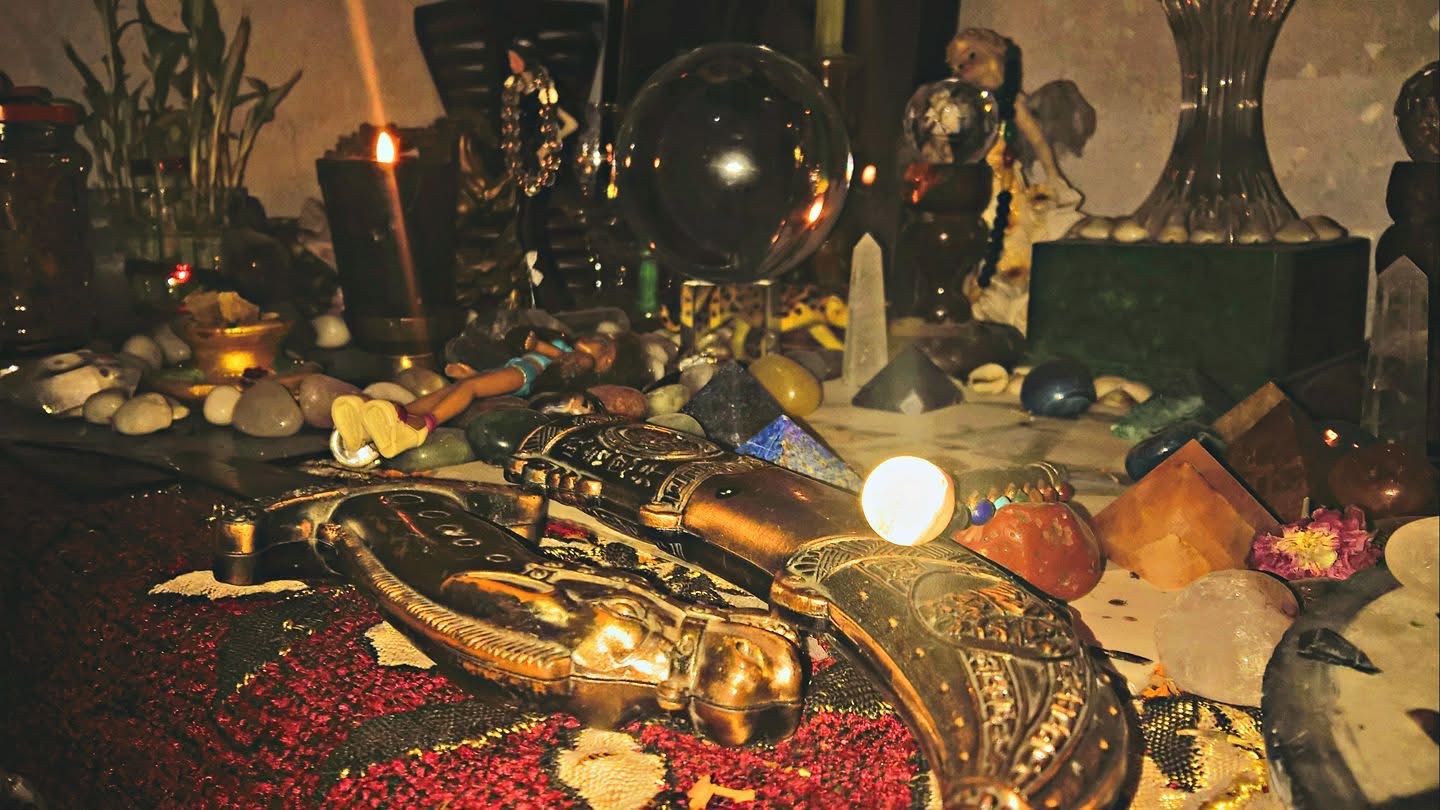
I remember the first time I invited the initiates to see the altar. They were quiet when they entered. The room was filled with crystals and stones, each carrying its own energy. The light, the scent, the arrangement—it all created a space that was hard to describe. They looked around, almost unable to put their feelings into words. Mystique, especially, was deeply drawn to it. She asked many questions—about the setup, the rituals, the meaning behind each object. Later, she gifted me a painting of Goddess Hekate, along with a Nepalese puppet doll. Both found their place on the altar, as if they had always belonged there.
One evening, she came to me with a strange curiosity. She asked, quietly, if I had ever felt the presence of an entity near the altar. I looked at her, smiled, and said, “You mean the old man who sometimes sits to the side?” Her reaction was immediate—surprise, excitement, almost disbelief. She said she had seen it too, just for a second at times. A brief appearance, and then gone. I told her I had sensed it many times. But I never tried to investigate it further. There was no fear in it. It felt harmless, almost like a silent observer. Some things, I believed, were better acknowledged than questioned. Around that time, Wicca began attracting more people.
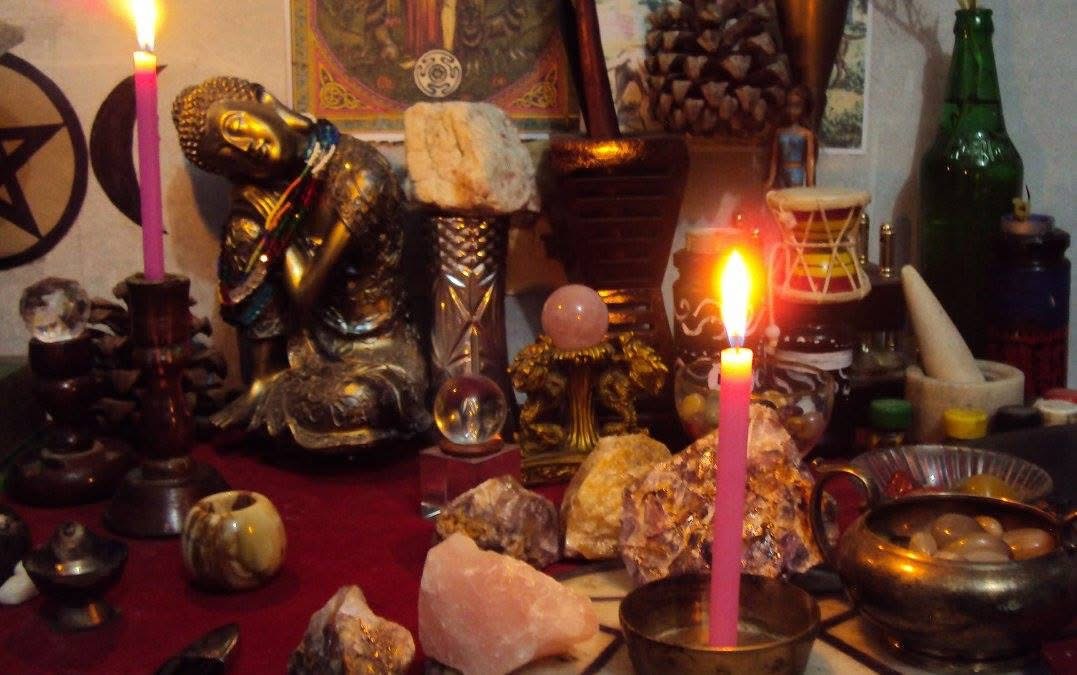
On weekends, many would come for tarot readings. Word had spread, and I had become quite known in the town. Even politicians started coming, curious and hopeful. But truth is not always welcome. When I spoke honestly—especially about outcomes they did not wish to hear—they were not pleased. I remember one in particular. I had told him, clearly, that he would not win his upcoming election. When it came true, he returned, not with acceptance, but with demands. He wanted solutions. When I refused, he tried to threaten me, reminding me of his power and influence. He believed everything could be controlled, negotiated, or forced. He did not understand. In his world, power came from position. In mine, it came from within. I remember thinking, almost calmly—within my sanctuary, I do not follow orders. I give them. I never heard much about him after that. Perhaps his journey continued, perhaps it ended quietly. It did not matter. Because for every person who came with ego or control, there were many who came with sincerity—with hope, pain, or a need for guidance. And to them, I offered not predictions, but strength. Not control over fate, but the courage to face it. That, to me, was the true power of Wicca.
Of Delhi and the hauntings.
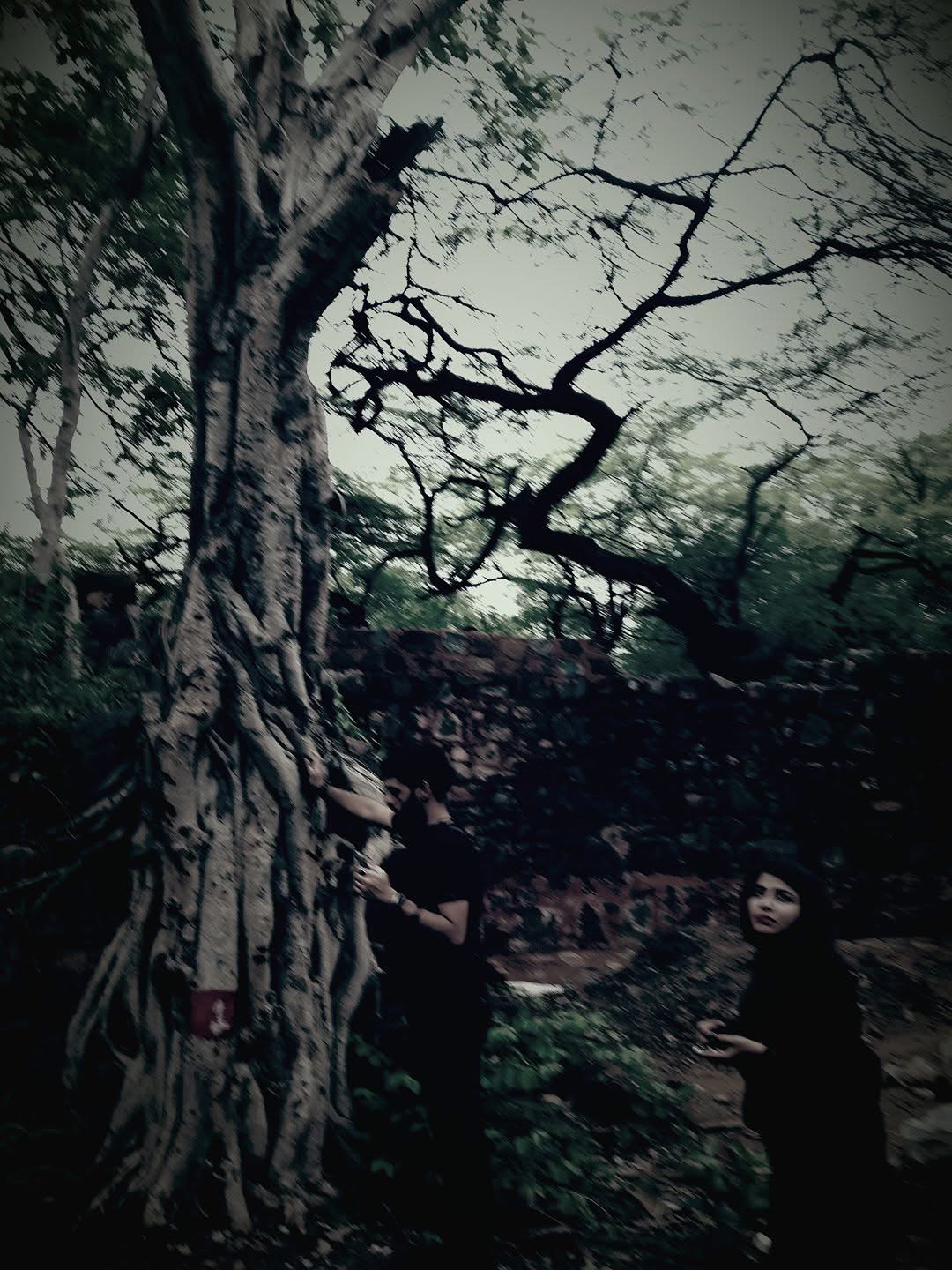
In the summer of 2017, we were meant to choose sites for our off-campus projects, and it felt as though each of us was being pulled in a different direction by something unseen. Mystique chose Nepal. She wanted to stay near Pashupatinath Temple, drawn by its spiritual energy and the presence of yogis she had begun to connect with. Her interest in yoga had deepened into something more personal, almost like a calling. I could sense that she needed distance—from the sessions, from the structure of our routines—to grow into whatever was unfolding within her. It was a quiet but powerful transformation. Hemanth, Raven, and I stayed back and chose Delhi for our project, renting a small apartment for two months while working on genetic engineering research. Delhi, in peak summer, was unforgiving. The heat was relentless, heavy in a way that no air conditioning could fully escape. Our days were long, spent in laboratories, surrounded by machines, data, and exhaustion. But evenings were different. Even in that chaos, we found ways to feel alive. By what felt like coincidence, though perhaps it wasn’t, our apartment stood right across from a music school. Raven and I took it as a sign. We resumed our practice—classical music and Kathak—finding rhythm and grace amidst the intensity of our days. Hemanth, however, remained distant from all of it. He had no interest in music or dance and would often spend his time watching meaningless animations or sleeping through the hours. It was just Raven and me, moving through those days with a shared curiosity and quiet understanding. We explored the city in our own way, sometimes visiting old, forgotten places—haunted monuments and silent ruins, places that carried stories in their walls. Many of those experiences I later documented in the book I wrote in 2018.
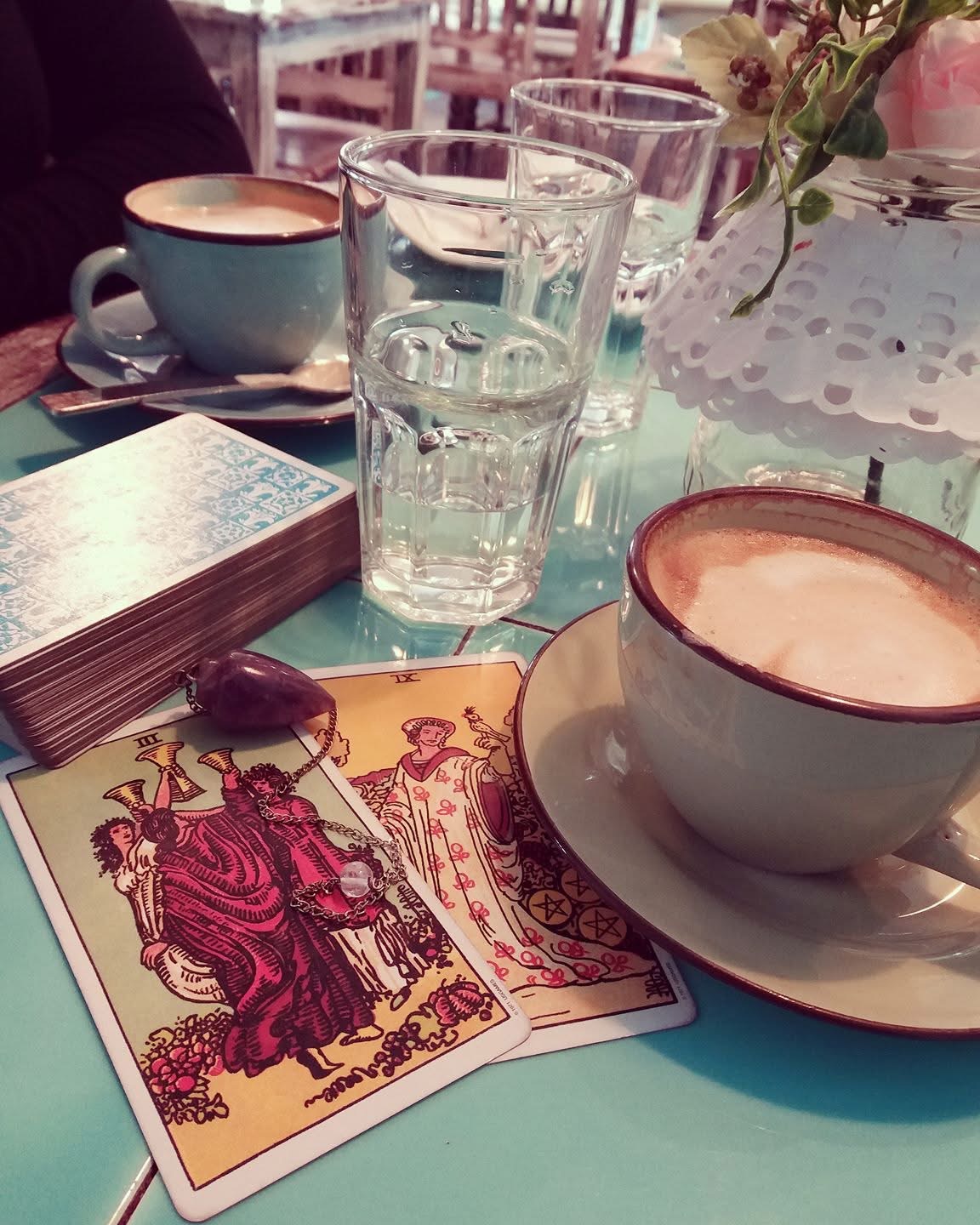
On certain evenings, we returned to our Wiccan practices, holding small sessions, reflecting on deeper themes like the Navras—the nine emotional essences that shape human experience. Around that time, I began to feel a shift in Hemanth’s behavior. My presence seemed to disturb him, though he never said it directly. The tension was subtle but constant. Eventually, Raven and I chose to move separately in our explorations, leaving him out of certain trips. It was not out of anger, but necessity. In contrast, the bond between Raven and me grew stronger. There was a quiet beauty in it—simple, steady, and unspoken. She had a rare quality: she cared deeply. On every trip, she would carry food for all of us, always thinking ahead, always giving. She was, in many ways, a healer of hearts. When people came to me seeking emotional healing, I often sent them to her. She worked closely with crystals, especially rose quartz, and had an intuitive understanding of human emotions. She could sense what people were feeling without them saying a word. She was a natural empath, and through her presence, her words, and her care, she brought comfort to many. I, on the other hand, remained distant from such emotional involvement. As a Wiccan, I had grown into solitude. I did not believe in love the way others did. To me, it often felt draining—listening to stories of heartbreak, shattered expectations, and misplaced devotion. I believed most of it was illusion, driven by desire or need rather than truth. There was no point, I felt, in wasting tears on those who did not truly value you. If anything, I believed in self-respect, in holding one’s own energy with dignity.
One could attract many by simply being whole within, but it was important to maintain a certain elegance—a quiet, untouchable strength. It reminded me of my grandmother. She lived simply, never wealthy, yet carried herself like a queen in her own small room. She preferred solitude and did not care much for social acceptance. Many did not like her, but she never tried to change that. She had devoted her life to a higher power, and there was a depth to her that few could understand. A week before her passing, she calmly predicted her own death. She handed over important responsibilities to my mother, as though preparing for a journey she had already accepted. The day before she passed, she said something strange to me—that she would never drink my tea again. I did not understand it then. But the next day, she left peacefully, as if simply stepping into another realm. She believed that attachment to this world only brought suffering, that even those closest to you could turn distant. There was a quiet detachment in her, not cold, but aware. She trusted very few people—perhaps only me. We would sit together, and she would tell me stories of her deities, of forces beyond the visible. Before she left, she passed her tools of magick to me. At that age, I could not fully understand their meaning, but now, looking back, I see the depth of what she carried.
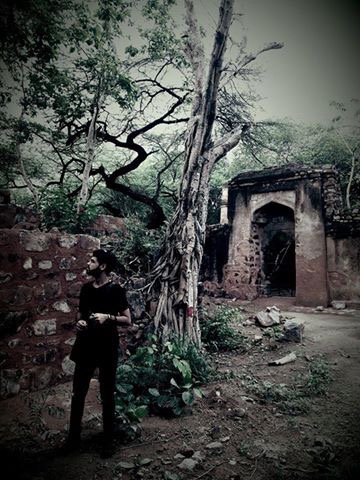
During that same period, we also visited an old structure in Delhi known as Bhuli Bhatiyari Ka Mahal, a 14th-century monument surrounded by stories of haunting and mystery. We went there not just out of curiosity, but with intention—to observe, to feel, to understand. What we experienced there was something I later wrote about in detail, as the place seemed to speak in its own way, revealing fragments of a story that did not belong entirely to the past.
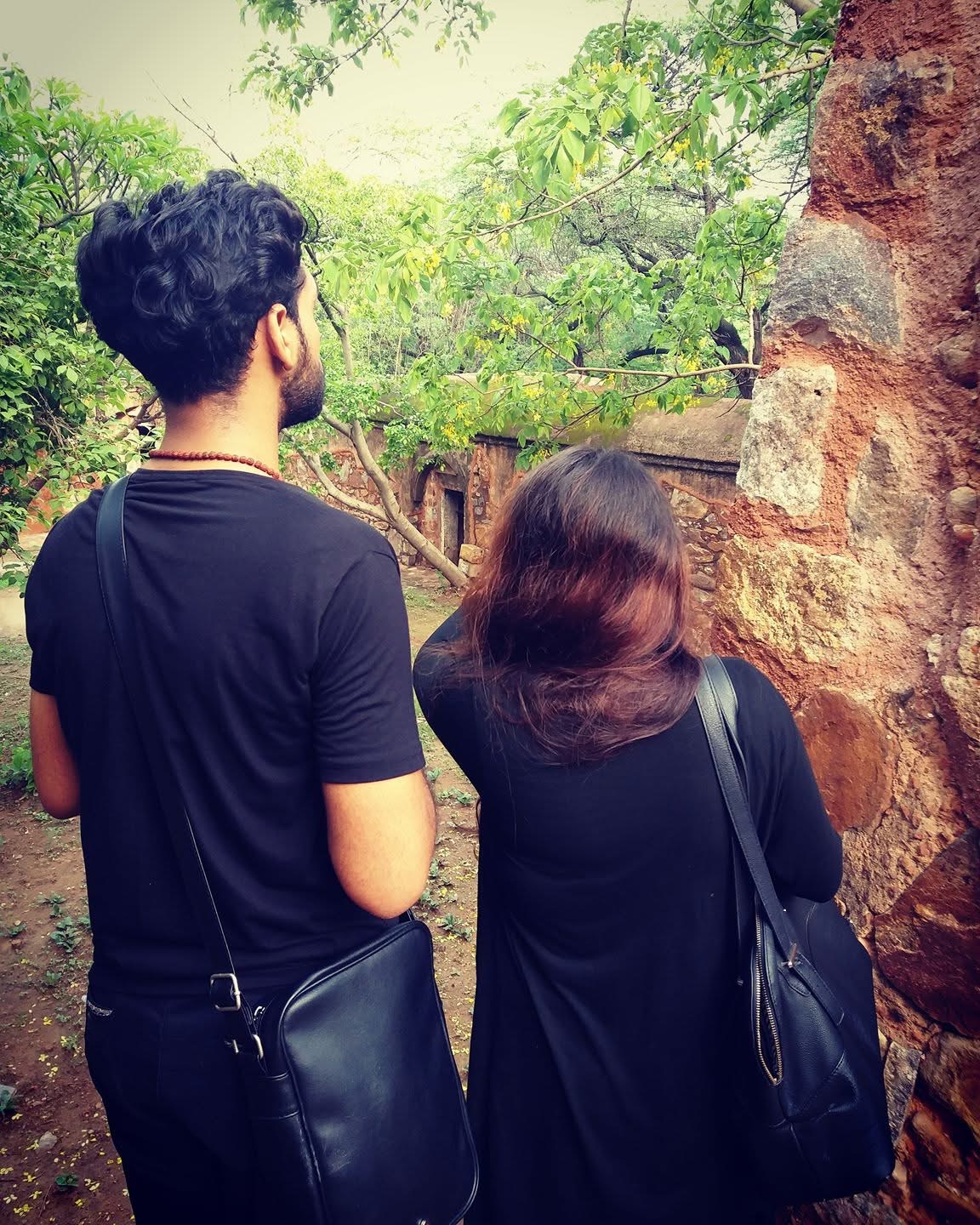
Delhi carried a strange kind of beauty—one that did not always show itself, but could be felt if you paused long enough. Its past seemed to breathe through its streets. As we walked through places like Jama Masjid and Majnu ka Tilla, and wandered across old monuments scattered through the city, there was a sense that history had not fully left. It lingered—in the stones, in the air, in the silence between sounds. There was a time when life must have moved here with elegance and grace, when love, devotion, and art had a different depth.
But that feeling would often fade.
The present would interrupt—the pollution, the rush of corporate life, the noise of factories, and the weight of a population that often seemed lost rather than driven. The contrast was sharp. It felt as though the soul of the city was still there, but buried under layers of chaos. I knew I could not stay there for long.
I completed my project quickly and returned to Punjab. Home felt grounding. I ate well—simple, clean, organic food—and allowed my body and mind to rest. It was a time of quiet preparation, as if I was gathering energy for what was to come next.
On Monsoon and the return.
By August 2017, it was time to return to the university.
There was a sense of excitement in me—not just for studies, but for reunion. Mystique had told me she was bringing gifts, and I remember that day clearly—the day the three of us met again after a long break. The trinity, as we had come to be known: Mystique, Raven, and I.
Mystique looked different. There was a freshness about her, but more than that, a calm, almost glowing presence. Her aura felt quieter, deeper. She brought with her a stone-carved skull, organic incense, and several other ritual objects from Pashupatinath Temple. Though she had spent much of her life in Nepal, this time had changed her. She spoke less, but sensed more. It was clear—she had opened herself to something deeper.
She could now feel energies more strongly, perceive what others could not. And perhaps that is why certain places reveal their divinity only to a few—because only a few are ready to receive it. Over time, the connection between Mystique and me had also evolved. It was no longer just friendship—it had become something more subtle, more spiritual. There was no need for constant conversation. We could understand each other in silence, respond without words. Those who observed us during sessions often found it difficult to explain what they were witnessing.
Raven, on the other hand, had grown in her own way. She had developed a deep connection with the Manas, not just intellectually, but emotionally and musically. There was a rhythm in her understanding, a flow that made her interpretations feel alive.
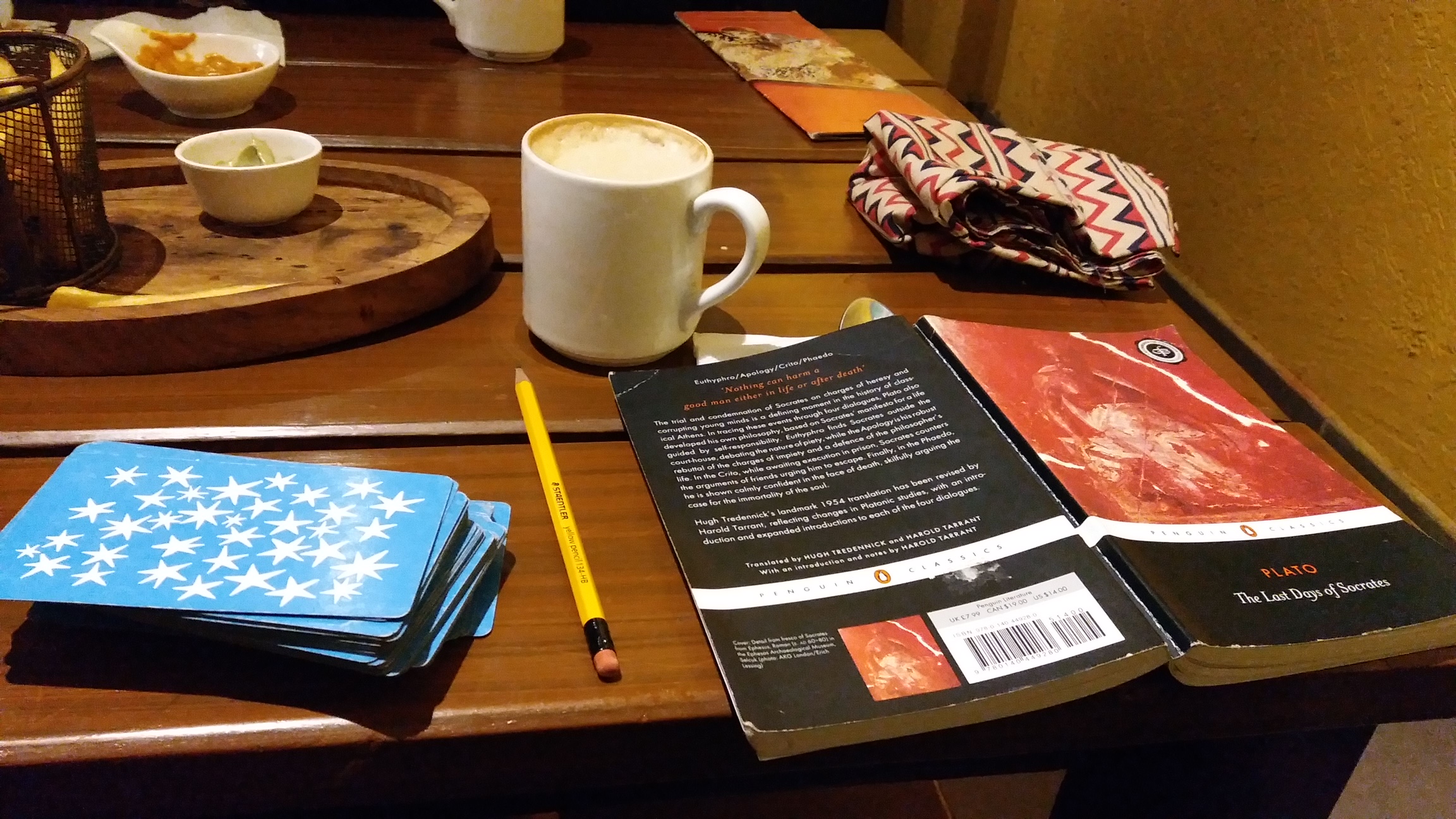
Around the same time, I had brought with me another book—The Last Days of Socrates. I wanted us to go deeper, to reconnect with wisdom—not just Wiccan, but philosophical, universal. It was time to take our studies to another level. And alongside all this, I had also begun working on my own book. Mystique played an important role in that journey. She would read through my chapters, edit them, question them, refine them. There was a quiet collaboration between us—one that did not need to be defined, only experienced.
Smita- the fourth one.
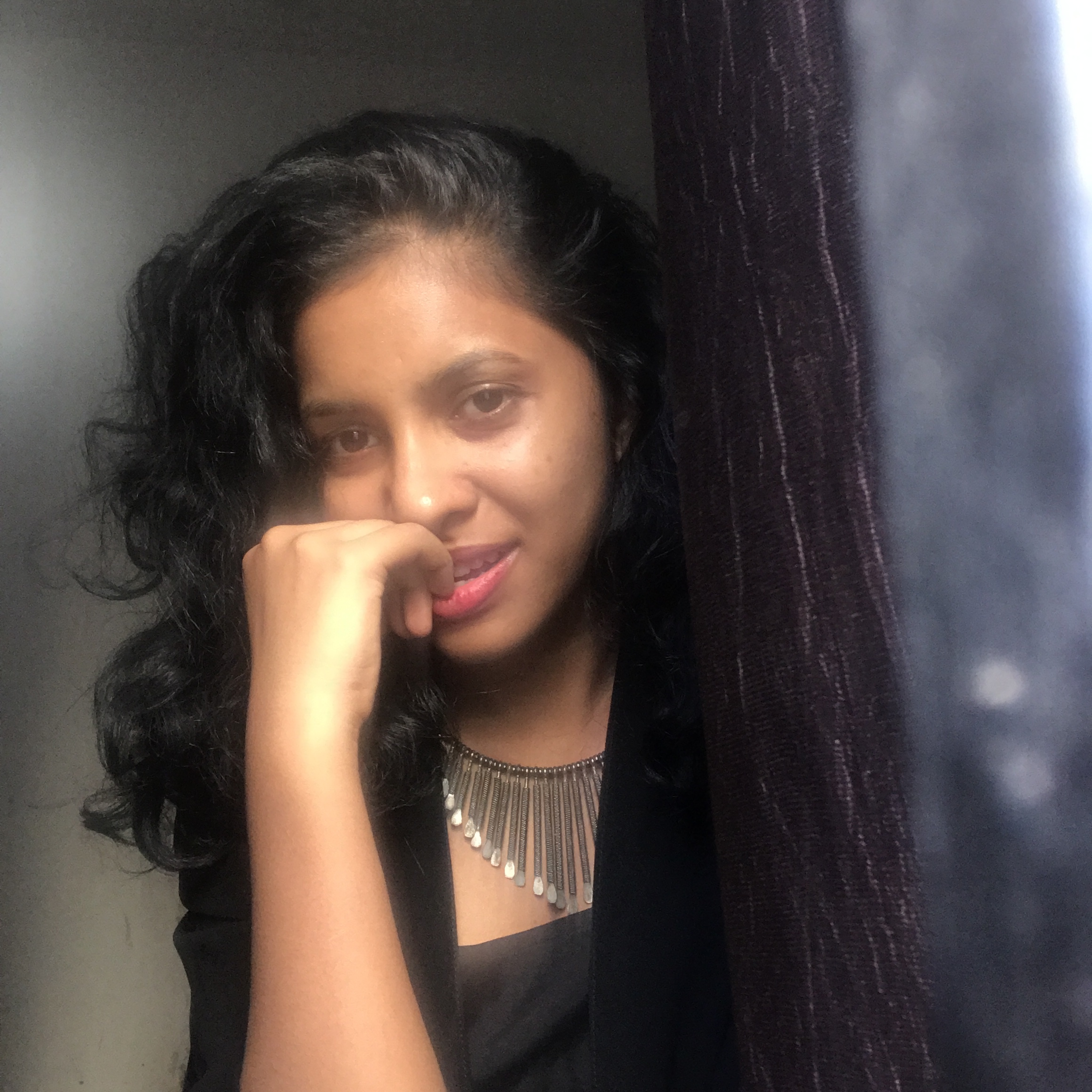
It was during this time that a girl named Smita began joining our sessions. She had the typical features of a Bengali girl—large, dark, expressive eyes that seemed to hold both curiosity and confusion, a face framed by long, open hair that was rarely tamed, no makeup, no jewelry, yet a presence that could not be ignored. Her brow often furrowed under the weight of studies and daily worries, yet she smiled widely, genuinely, in moments that broke through her seriousness. Most of the time she looked puzzled, as though trying to absorb everything at once, but there was an unmistakable attentiveness in her gaze, a desire to understand even what was beyond her comprehension. She lived in the same apartment as Raven and was fascinated by her lifestyle—the discipline, the quiet joy, and the rhythm of her days. She often asked Raven the secret to her bliss, the source of her energy and excitement. I could sense that Wicca had drawn her in. Unlike many others who joined for a fleeting curiosity, she stayed. Many came and left quickly, impatient, hoping to master magic in a day, but Smita was different.
Though she worked in the corporate world and often seemed lost in her own dreams, she carried a quiet hunger for answers—a desire for connection with something higher. Raven would often speak of her during our sessions, of the way Smita sang with her at night, of the questions she asked about the Manas, and how intently she listened to the stories we discussed. It was a time of the year when magic itself seemed to rise in the air, and our sessions were intense, alive with unseen currents. It was during this period, however, that Raven’s focus began to shift. Concerns over her studies, her curriculum, and her responsibilities weighed heavily, and I had to make the difficult decision to let her leave the coven temporarily. That was a strong step, a test of patience and devotion. At that moment, it was only Mystique and I remaining. The coven, which had started with six people, was reduced to two. Was I upset? Not at all. I understood—it was the will of the universe. The tradition continued, unbroken. Every morning, as the Cue Lounge opened, Mystique and I would begin our sessions, anchoring the energy and guiding the work. After some days, Raven returned, expressing that she could never truly leave the coven. She felt incomplete without it. I had known she would come back—this was the place where she felt at home, where she transformed, where she was seen and loved. The coven, in many ways, was my own experiment with love. I wanted to see if it could transform people—and it did. I welcomed those who were tired, bullied, or broken by the cruelties of the world. I helped them embrace their beauty, their individuality, their own strength. I loved them all, in a quiet, steadfast way. Perhaps this was the work of the High Priest in an ancient Egyptian temple, or the oracle who guided those who came seeking light and guidance. Perhaps it was the purpose of magic itself—to ignite the spark in those who carried it. I have come to believe that people seek answers only when the seed of magic already lies within them, waiting for nourishment to bloom. Those without the seed, without that inner call, live their lives according to the rigid norms of society, never touching what could have been.
Of October.
It was the month of October. One evening, Raven invited Mystique and me for dinner at her apartment. That year, 2017, October felt different. The cold had arrived too early, settling into the evenings with a quiet sharpness that did not belong to that time of year. A thin mist would rise as the sun set, wrapping the campus in a pale grey stillness. The air felt heavy, almost watchful, as if something unseen was moving through it. It was also the time when Anaad was preparing to leave the university.
During those days, I would often see him walking alone across the campus—through corridors, near the lawns, sometimes by the same paths we crossed every day. There was always a distance around him, as if he carried his own world with him. I had tried, many times, to speak to him. But something always held me back. Words never formed.
He began appearing in my dreams.
Again and again, without reason, without context. I tried to ignore it. I told myself it meant nothing, that it served no purpose. I could not understand it, and I did not want to. In a strange way, I felt relieved that he was leaving. I thought it would finally free me from that quiet, unexplainable attachment.
I remember the last day of the seniors.
They were all dressed in white t-shirts, holding marker pens, writing messages for each other—memories, jokes, unfinished sentences. It was a ritual of endings. That evening, I saw Anaad standing in the park. He wore the same white t-shirt, a pen in his hand. He was looking at me.
For a moment, I wondered if he wanted me to write something.
But I didn’t.
I walked past him.
And told myself that it was over—that I would never see him again.
Later that evening, as we sat together at Raven’s apartment, I shared this with Mystique, Raven, and Smita. They listened quietly, each in their own way trying to understand what I myself could not. Smita had prepared dinner that night. She had cooked traditional Bengali food—Machher Jhol, Alur Chorchori, and other dishes that carried the warmth of her culture. There was a simplicity and honesty in her cooking. I tried the food, but the fish was difficult for me. It was full of fine bones, delicate and sharp. Only someone used to it could eat it with ease. I smiled and stayed with the vegetables instead.
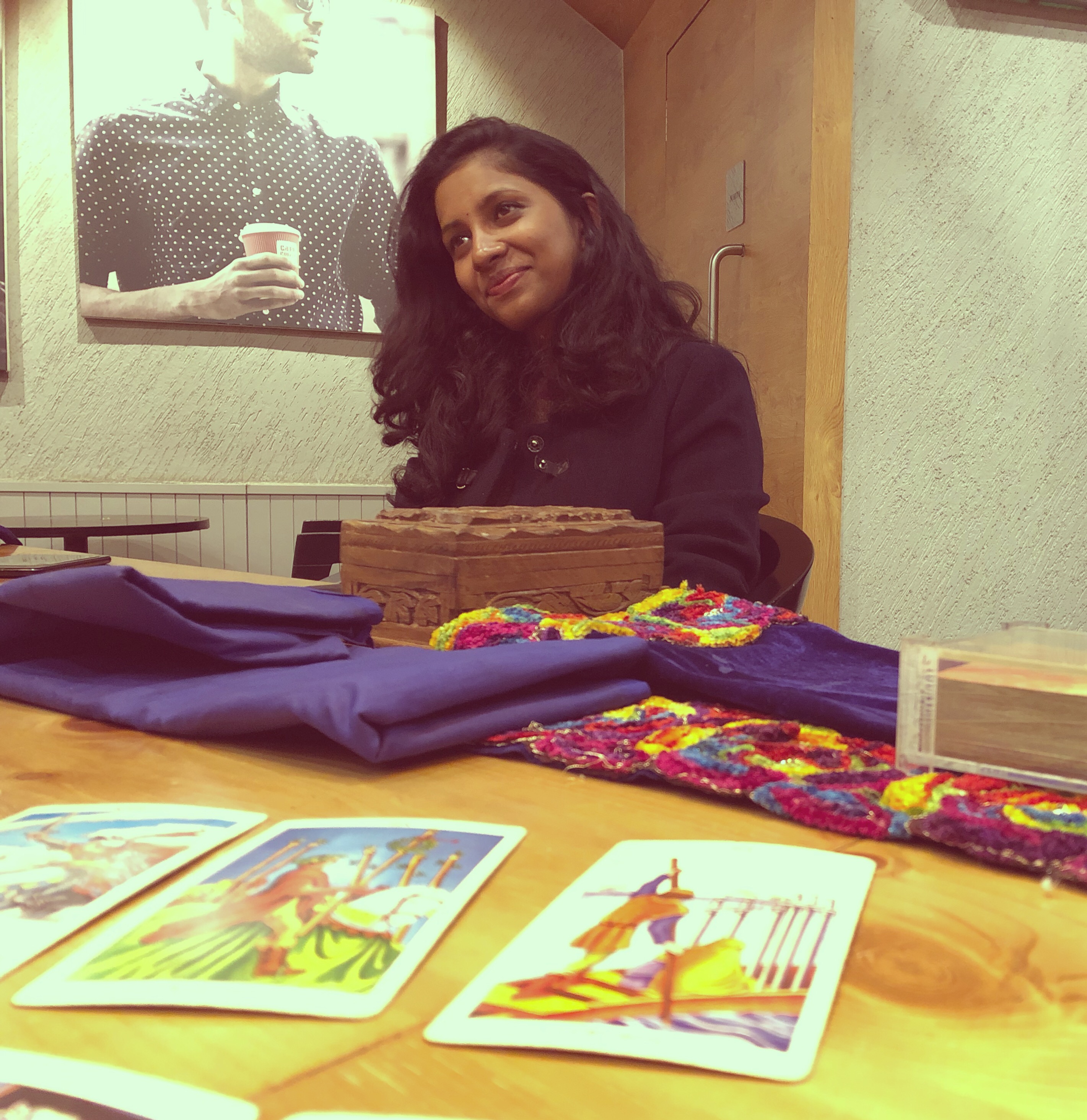
Smita, however, was glowing.
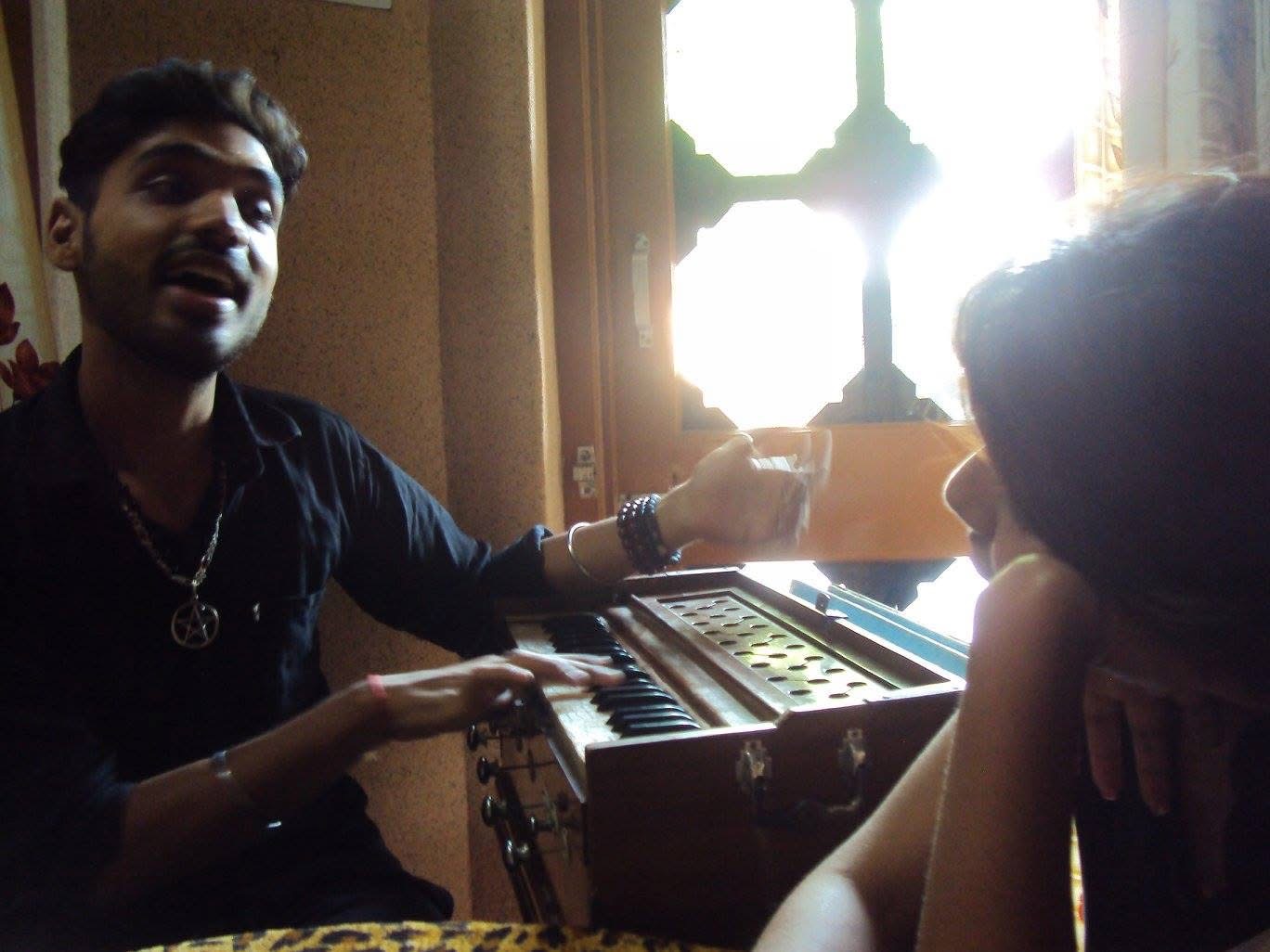
She seemed excited—more than usual—to be part of that evening, part of the coven. She watched everything closely. The way we spoke, the chaupais we sang from the Manas, the way I played the harmonium—an instrument she seemed quietly fascinated by. Her eyes followed every detail, trying to absorb more than she could fully understand. Outside, the mist had thickened.
The night carried a strange stillness. It felt like one of those nights where the boundary between worlds grows thin—where silence itself begins to feel alive. There was something in the air, something subtle yet present. Smita felt it too.
I could see it in her expression—she was beginning to believe. Not fully, not yet, but enough to know that something existed beyond logic. Perhaps, in time, she would learn to reach it. She was a student of computer science, grounded in structure and systems, yet drawn toward something intangible. She would join us whenever she could, balancing both worlds in her own way.
And I often found myself wondering—
Was this coincidence, or was something already written for her?
Perhaps destiny had placed her there, quietly, waiting for the right moment to unfold.
Of Shimla
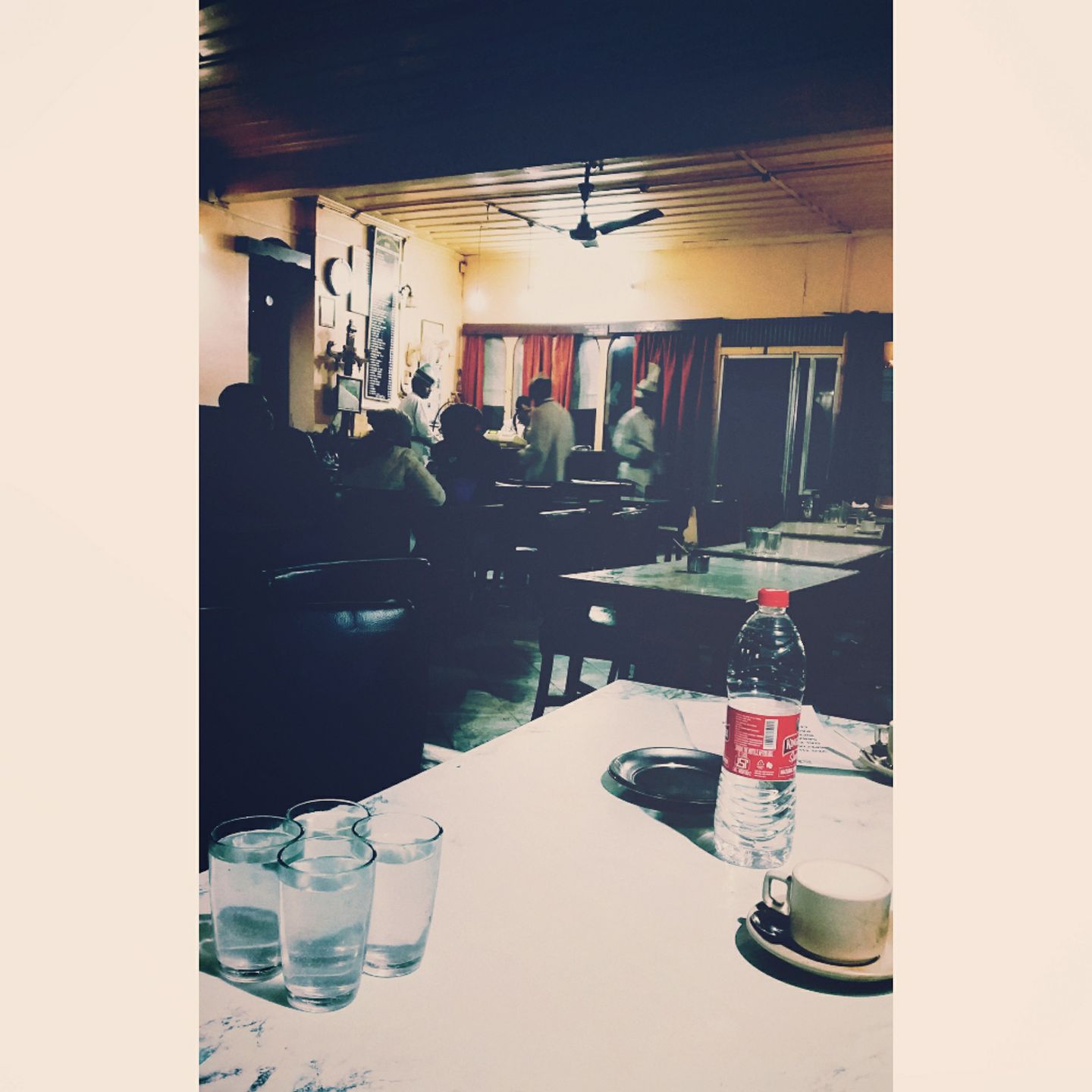
During the Christmas season of 2017, the three of us—the trinity, Raven, Mystique, and I—decided to travel to Shimla. I wanted them to experience what I had once felt there—the quiet pull of nature, the unseen energies that had inspired me to form the coven and to trust in something beyond the ordinary.
We took a bus. It was a long journey, slowed down by road construction, winding through hills that seemed endless. But those hours became meaningful. Somewhere along the way, I began speaking about the mysticism of the Sundar Kand, about devotion, strength, and the presence of Hanuman—the Pavan Tanaya, the son of the wind. I told them how, in places like Shimla, one could almost feel that presence in the air itself. There was something different about it—light, yet heavy with stories. And at the same time, I felt that many restless energies still lingered there, unseen but not absent.
Later, I wrote about these experiences in my book As They Spoke to Me, in a chapter called Spirits in Shimla.
When we arrived, the town looked beautiful.
It was night, and the entire place shimmered with lights. The streets were alive, yet calm. The cold was sharp, almost piercing—it touched the skin and stayed there. And then, I saw it.
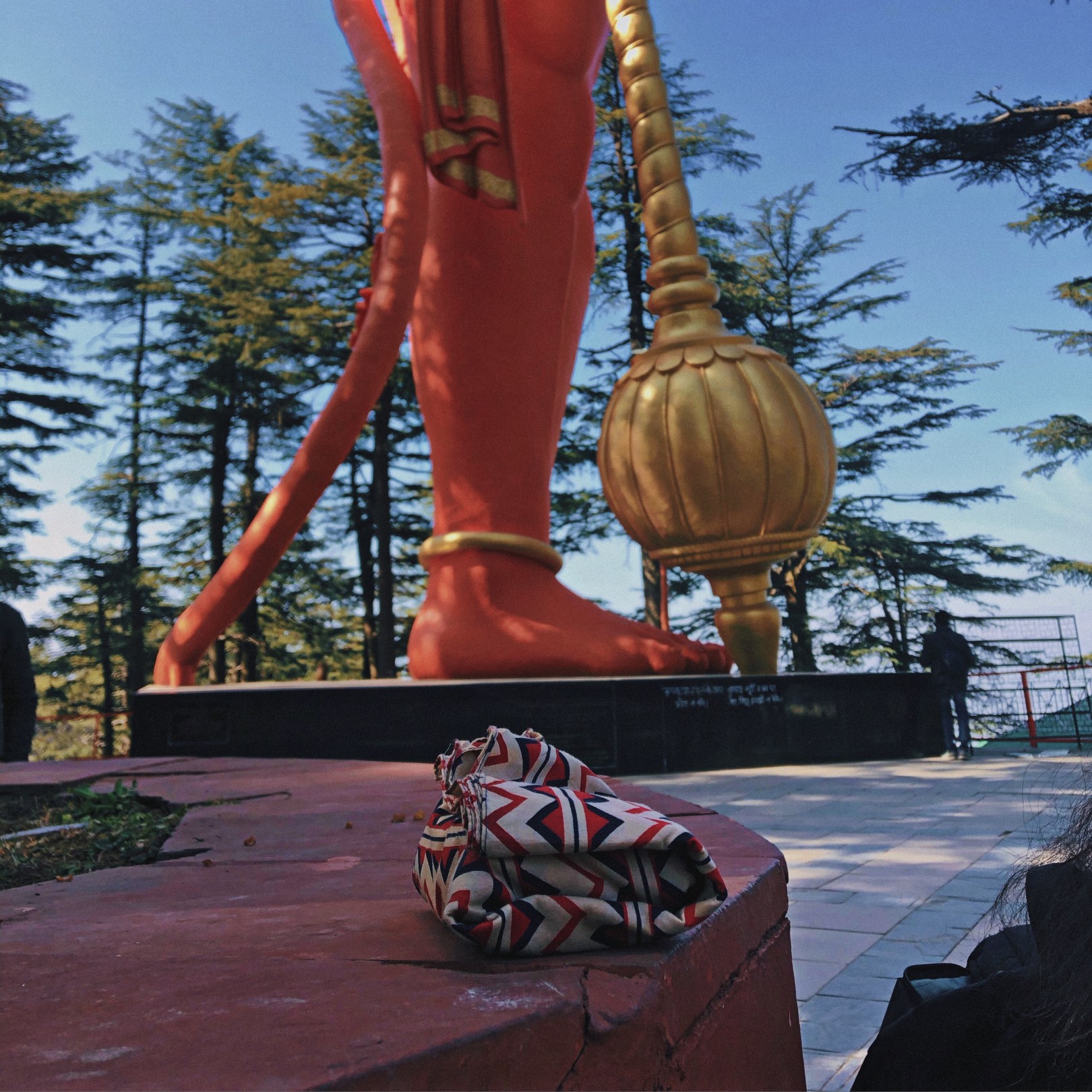
The giant orange idol of Hanuman. It stood glowing in the darkness, powerful and still, yet somehow alive. There was something about it that pulled my attention completely. For a moment, it did not feel like a statue. It felt present. Awake. Watching.
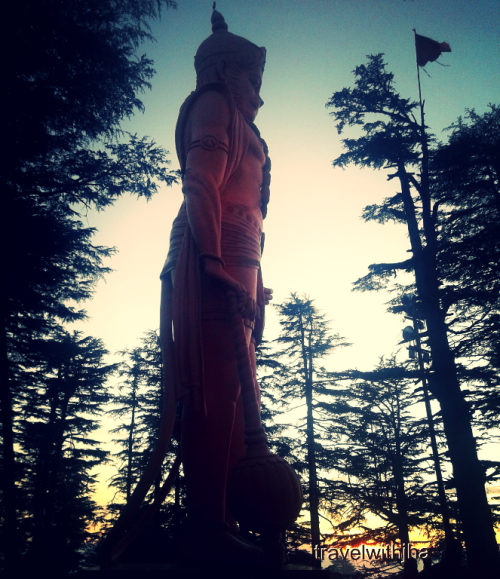
There was a kind of magic in the air that night—subtle, but undeniable.
We walked, we ate, we let ourselves be part of that space. At one point, I met an old friend and left the girls to explore on their own. They didn’t usually like it when I did that, but I had my reasons. I wanted them to spend time together, to strengthen their bond. Somewhere within, I knew that life would not always allow them to remain this close. Their unity was my strength.
Mystique and Raven shared something rare—something pure and difficult to find. There was a quiet understanding between them, a natural flow. Watching them together gave me a sense of peace, almost like witnessing something that was meant to be. During that trip, we also experienced certain unexplained moments—subtle encounters, things that could not be easily described. Because of that, instead of staying just one day, we decided to extend our stay.
And now, as I write this, I find myself wondering…
If I could return to that time, even for a moment, I would.
Because what we had was not just an experience—it was a feeling, a connection that is rare.
Over time, I have come to understand something simple, yet profound.
The highest form of magic, and the deepest form of devotion, is love.
Without love, there is no true connection—to people, to the divine, or to oneself. Love can exist in many forms—between friends, within family, between souls that simply understand each other. And when it is unconditional, it brings you closer to something higher, something sacred.
What we shared was love.
And not just love, but a sacred kind—one that felt chosen, shaped by something beyond us.
Perhaps, by existence itself.
Of last Days and Subtle sadness.
As we stepped into the year 2018, our bond had grown deeper than ever before. The winter was cold, yet filled with an unusual warmth from the sun. The air felt fresh, almost new, as if something gentle was beginning even as something else was preparing to end. There was joy in our days, a quiet happiness in simply being together. And yet, beneath it all, there was a knowing—we were in the last semester of our degree, and time was slowly leading us toward separation.
During our sessions at the Cue Lounge, this feeling would sometimes rise without warning. In the middle of laughter, music, or discussion, a moment of silence would fall. We all knew what it meant. Soon, we would go our own ways—different cities, different lives, different paths. Raven, being the most sensitive, could not always hold it back. Her eyes would fill, and sometimes she would quietly cry. Mystique, on the other hand, rarely showed her emotions, but she would speak of a heaviness in her chest, as if something within her already felt the distance that had not yet arrived.
It was during this time that I realized my role had begun to change. It was no longer just about guiding them within the coven, but preparing them to step beyond it—into a world that would not always be gentle, and where the protection we had created together would not always surround them.
One day, as we sat in the Cue Lounge, immersed in one of our usual sessions, something unusual happened. I felt a shift. It was subtle at first, then clearer—a presence, like a thin stream of smoke, entering through the front entrance. It moved slowly, almost deliberately, and came near me. It did not feel empty. It felt aware, as if it carried a kind of consciousness.
In that moment, I looked at them and said, “Right now, you are in the safest place. You are in your highest self, experiencing true peace and happiness. This—this state—is who you really are. But when you step out into the world, you will face challenges. Here, you are held within the energy of the coven, protected in ways you may not even realize. Outside, life will test you. The real challenge will not be to find this state again—but to hold on to it.”
They listened quietly.
And after some time, just as gently as it had appeared, the presence faded. It was gone, leaving behind only a stillness, as if nothing had happened—yet everything had been understood.
Of Lucifer.
During February 2018, as we were deeply involved in university work and our Wiccan sessions, something began to change. The energy was no longer as light as before. There was a shift—subtle at first, but strong enough for me to feel it. It felt like a storm was approaching, something unseen but inevitable. At the same time, I noticed changes within myself too. I was becoming more emotional, more aware of feelings I had not explored before—perhaps even a sense of romance awakening quietly within.
Around that time, the three of us went to watch the movie Ek Thi Daayan. It showed witches in a negative way, something we didn’t quite agree with, yet there was something about the film that stayed with me. I especially liked Konkona Sen Sharma—her presence, her depth, the way she carried the role. The character “Bobo” in the film was connected to darkness, yet chose not to follow it. The movie itself felt strange, almost unintentionally funny at times, but visually and emotionally, it had an impact.
Not long after, someone new entered our lives. I allowed him into our sacred circle—the space that had always belonged to just the three of us. He was drawn to the energy we shared, curious, almost fascinated by it. I chose to call him “Bobo,” inspired by the film.
He had a striking presence. Light-colored eyes, very deep—almost piercing, as if they could look straight through you. His hair was brown and slightly curly, his skin very fair, and his physique suggested that he took care of himself. There was intelligence in the way he spoke and carried himself, but also something sharp, something calculating. It would be fair to say he was clever—but there was also a subtle darkness I couldn’t fully understand at the time. His aura was strong, almost overwhelming.
Though I don’t usually define people by astrology, I remember he was born on the 6th, a Taurus. That gave him a strong Venus influence—charm, attraction, persuasion. In the beginning, I thought he had come to be part of what we had created. But slowly, I began to notice something else. He started influencing us—subtly, carefully—creating distance, planting thoughts, shifting energies between us.
I could see what was happening.
Instead of confronting it directly, I chose a different approach. I played along. I let him believe he was succeeding, that he was gaining control, while I remained aware of his intentions. In my world, I do not let anyone overpower me. But this silent observation, this constant awareness, became exhausting. It felt like he carried an energy that did not wish to build, but to disturb—to break what existed.
Even now, I sometimes wonder if it was a test.
Looking back, I regret allowing that energy into our sacred space. What we had was pure, protected, and rare. My intention had only been to help him—to bring calmness, healing, and some peace into his life. I never turned anyone away who wished to be part of the circle. But I did not realize then that some people, especially those deeply disturbed within, can unintentionally bring harm, even when you offer them light.
Our bond—the bond of the three of us—was never truly broken. But it changed. There was distance now, not emotional, but physical and situational. Decisions began to shift. Time together became less. The sessions that once flowed naturally started happening less often.
I found myself occupied more with this new presence, something that was never my intention. And in that, something delicate was affected.
I often think—if I had not allowed that interference, perhaps we would have had more time together. More moments. More memories.
Still, there was something reassuring. Mystique and Raven stayed close. They spent time together, supported each other, and held onto what we had created. And in a way, that brought me peace.
Because even when tested, what is real does not disappear—it simply changes form.
Of Dhaulidhaar Hike.
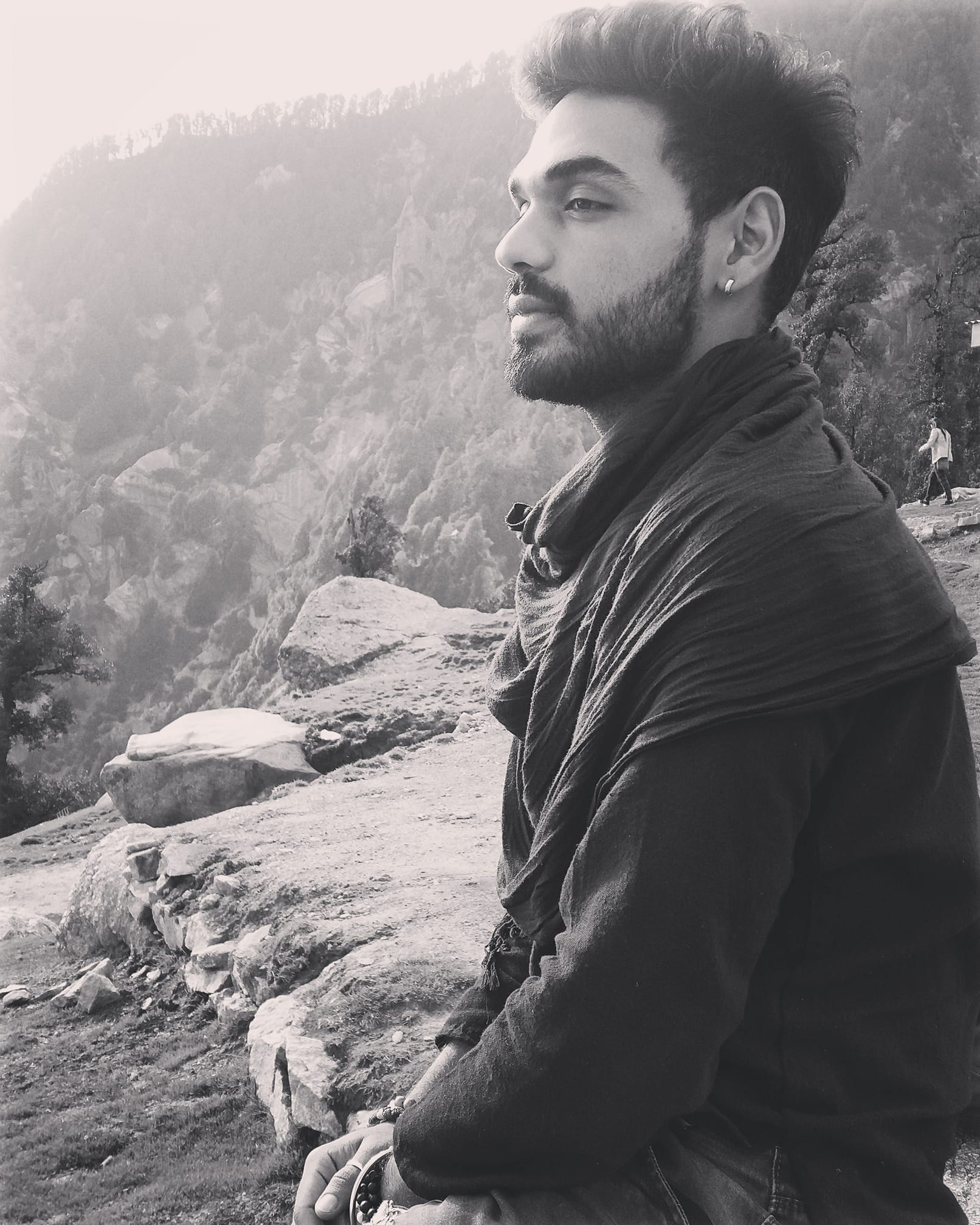
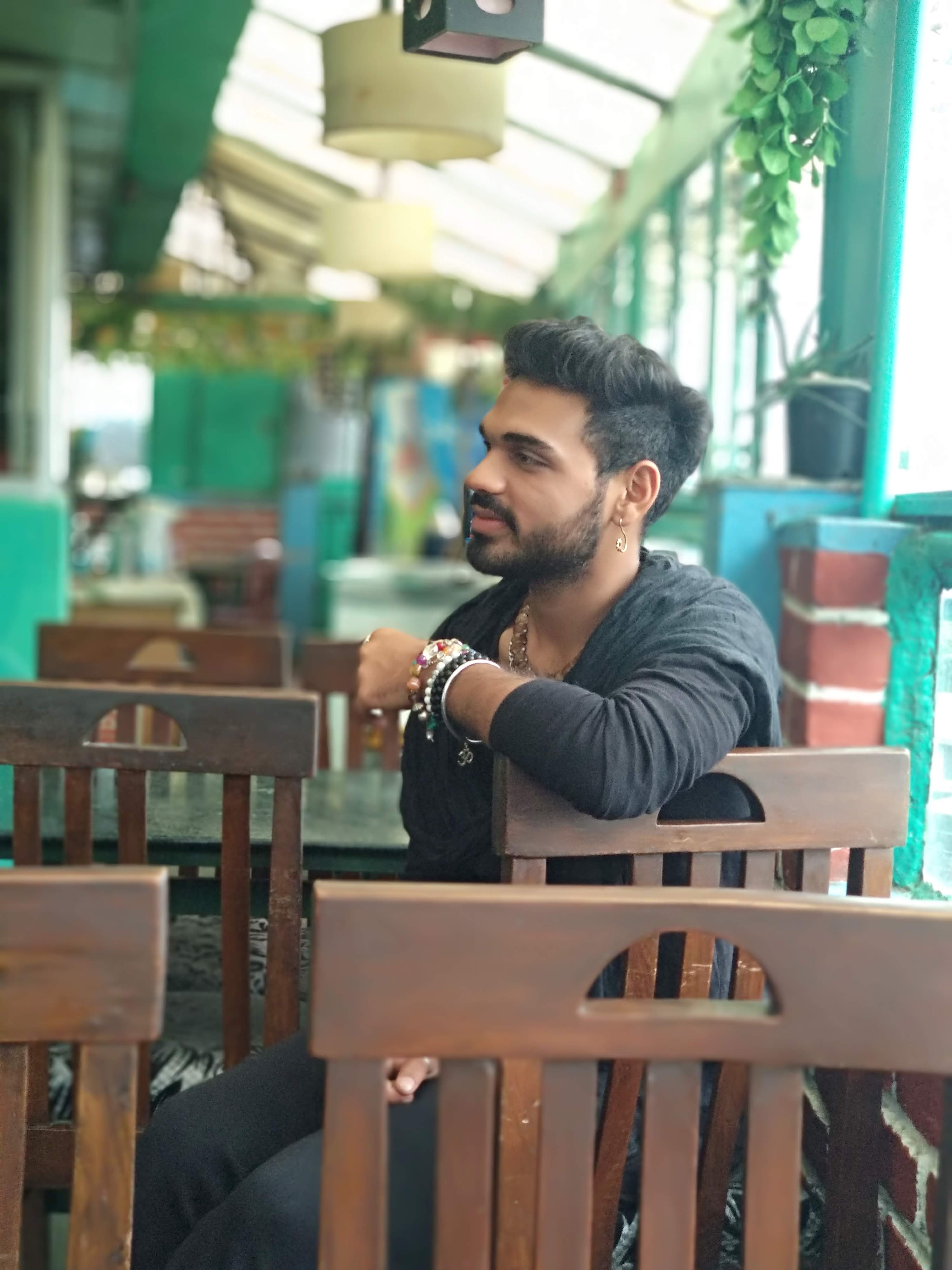
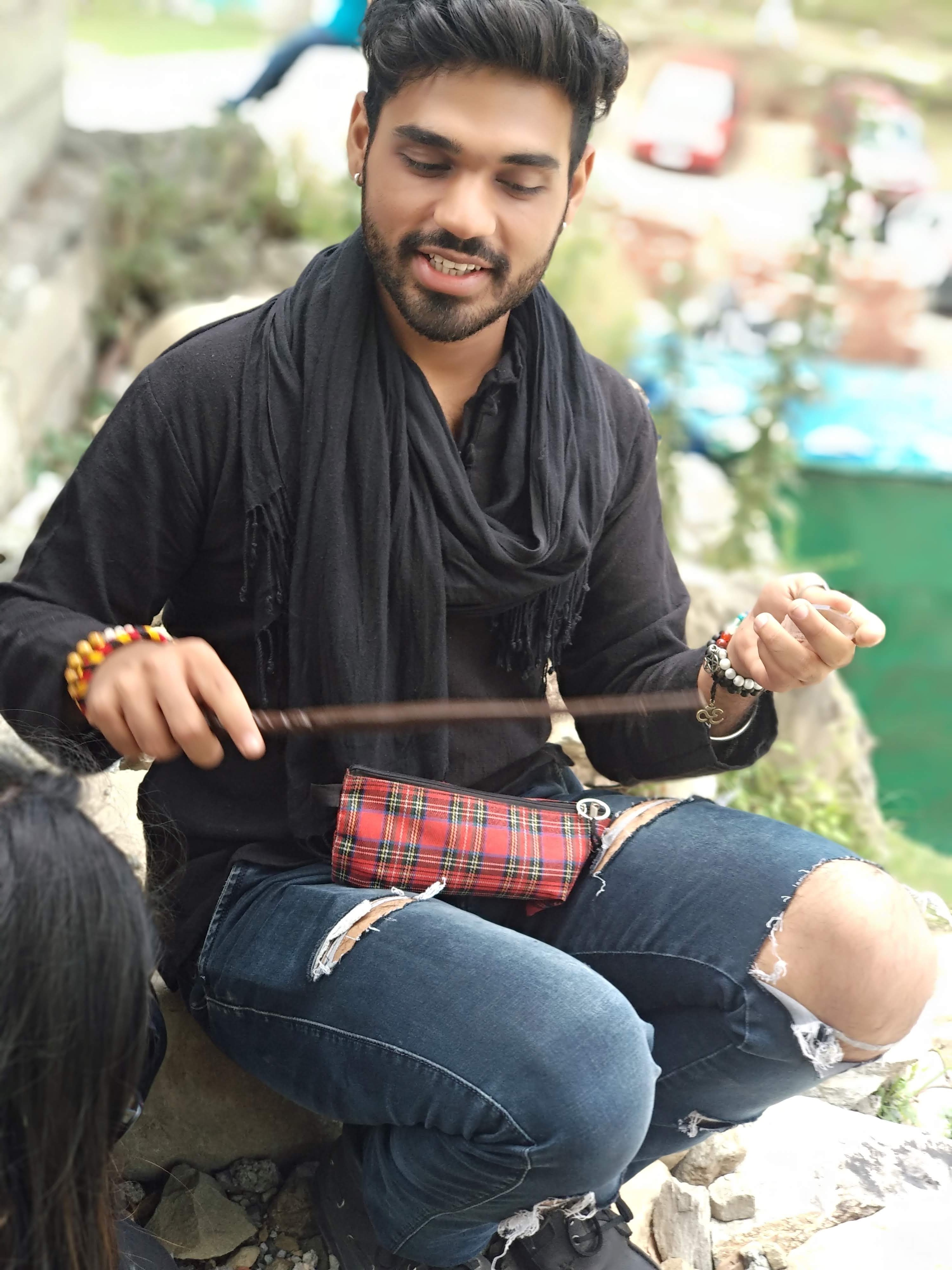
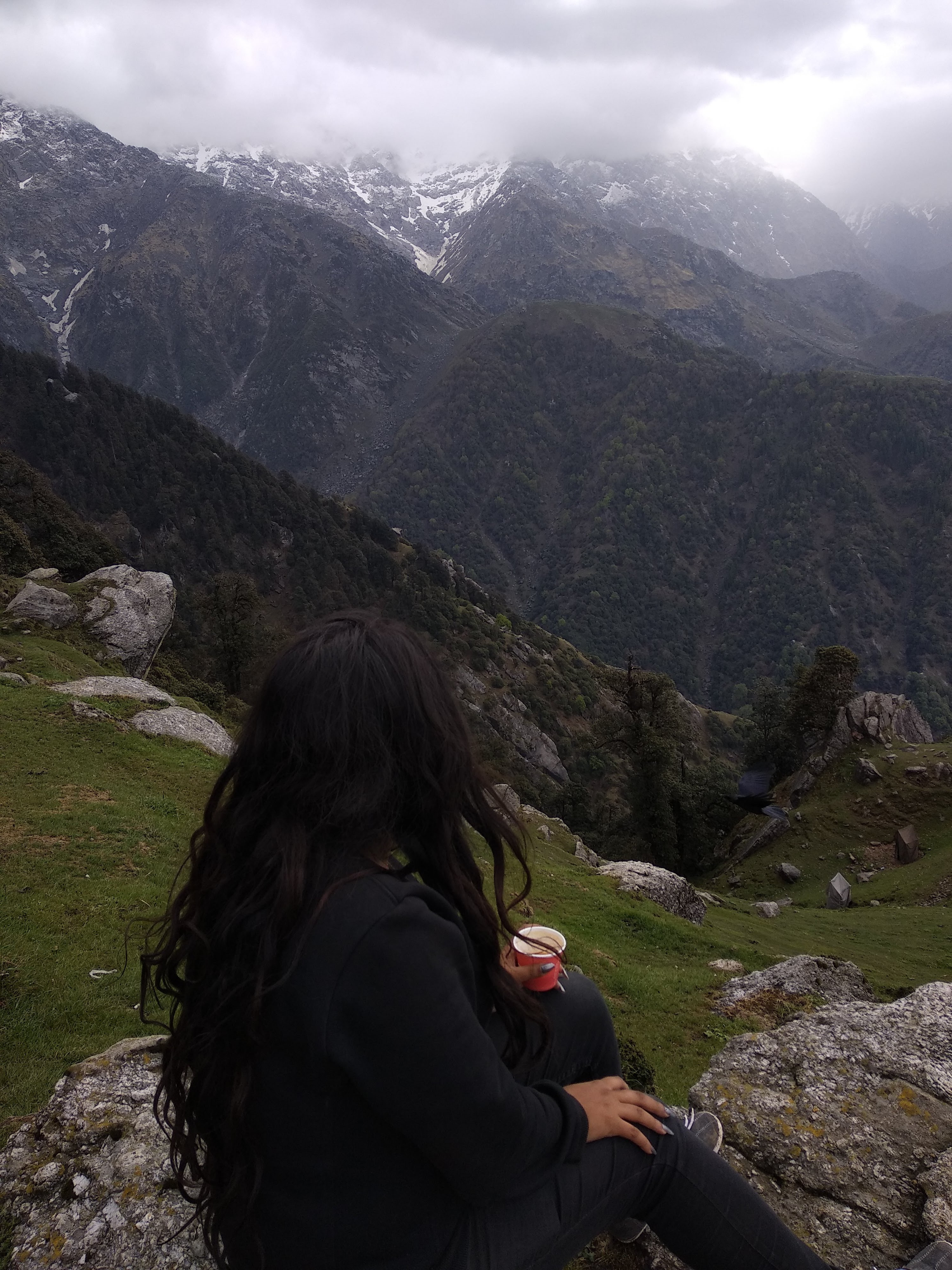
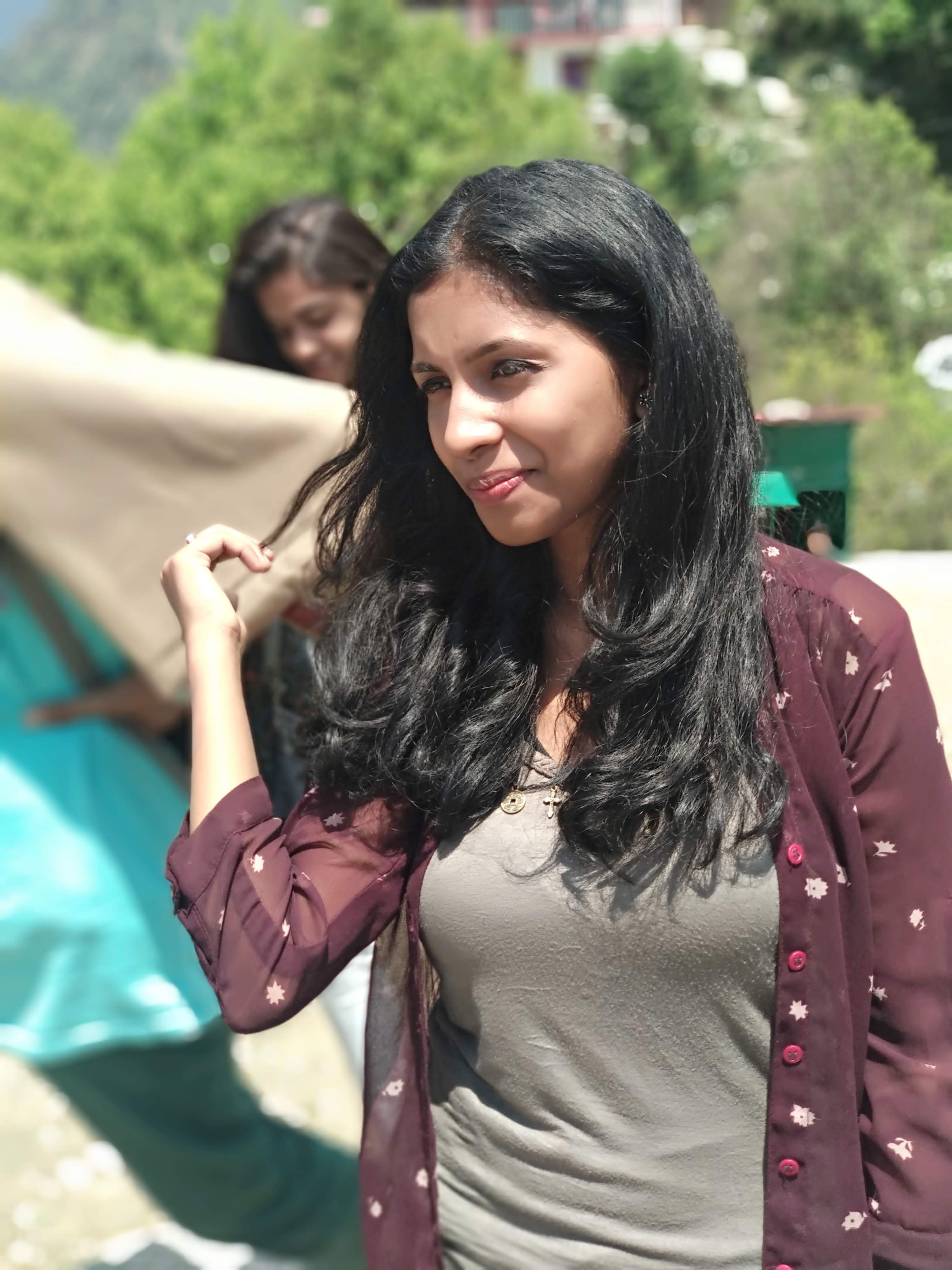
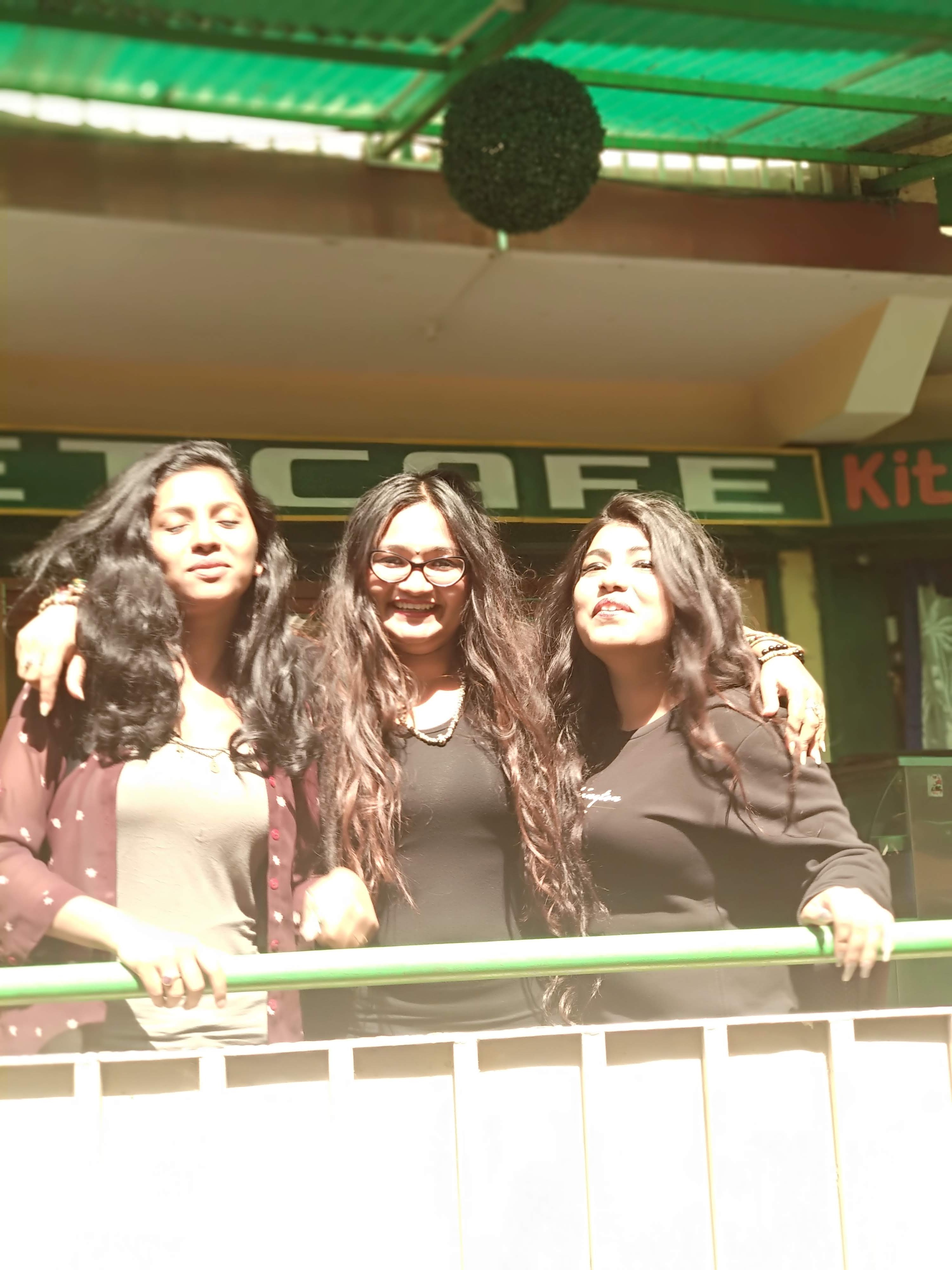
In the month of May, when I finally asked Bobo to leave the circle, I knew it was the right decision. His presence had begun to feel destructive, and the space we had once protected no longer felt pure. The moment he was gone, I felt a strange sense of freedom—but also exhaustion. The constant inner struggle had drained me. My confidence had weakened, my will had been tested, and somewhere along the way, I had lost touch with my inner power. The inspiration that once came so naturally was no longer there. Looking back, I believe that was my test—my Wiccan test.
I knew I needed to heal, not just mentally, but spiritually. And for that, I turned to the mountains—the Dhauladhar Range. There was something about those mountains that always called me back, something grounding, something real. But I also knew I needed to prepare myself before going there, to be ready to receive whatever the mountains had to offer.
During that time, Smita had become a regular part of our sessions, along with a few other friends. Our afternoons were filled with laughter, shared meals, and simple joy. Those moments, though ordinary, played a big role in helping me recover. Slowly, I began to feel lighter.
One summer day, I suggested that we all take a short trip to the Dhauladhar range and spend a night under the open sky. The idea came up during one of our Cue Lounge sessions while discussing “Manas Jogini,” and everyone welcomed it with excitement. Some old members of the Cauldron joined us too, and Smita was part of it as well. It was beautiful to see how naturally everything came together—Smita took care of the hotel bookings, Raven handled the food, and Mystique prepared herself to observe and note everything from the journey.
We left on the evening of May 2. The journey itself felt like an adventure, but what happened there was something deeper.
At one point, I was lying on a warm stone, absorbing the sunlight. Without realizing it, I slipped into a trance-like state. It felt as if some unseen force had entered me—not in a frightening way, but in a healing one. There was a calm, a deep stillness, as if something within me was being repaired. I knew it wasn’t just imagination.
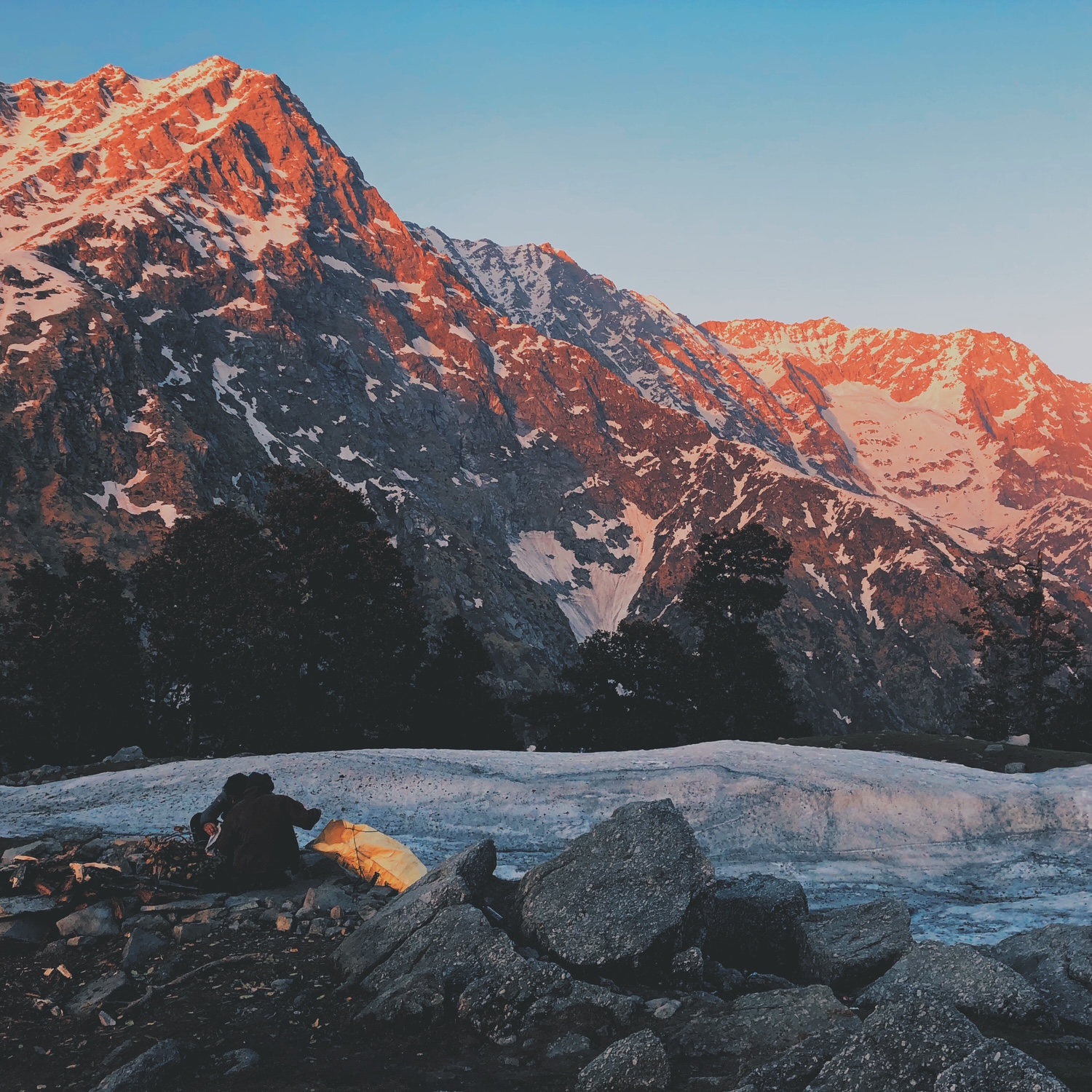
When I opened my eyes, I saw all of them—the coven—together. They were laughing, setting up the camp, talking freely, completely present in that moment. And as I watched them, time seemed to slow down. I stood still, just observing. A thought crossed my mind—what if this is the last time we are all like this together? We were in the final year of our degree. Life was about to change. I wondered if years later, they would still be the same, or if time would reshape everything.
I let myself feel it fully—the joy, the gratitude, and a quiet sadness. Tears came, not from pain, but from the depth of the moment. And then, almost instinctively, I reminded myself—I am a Wiccan, I must stay strong. But a part of me wondered… had I seen something about the future that unsettled me?
From a distance, Mystique noticed me. I often felt she could read beyond words. She walked up to me and gently asked, “Punnu, what are you doing?” I wiped my tears and said, “Let’s go for a walk to the next mountain. Let them decide the campsite.” I knew we needed that moment—a quiet, honest conversation.
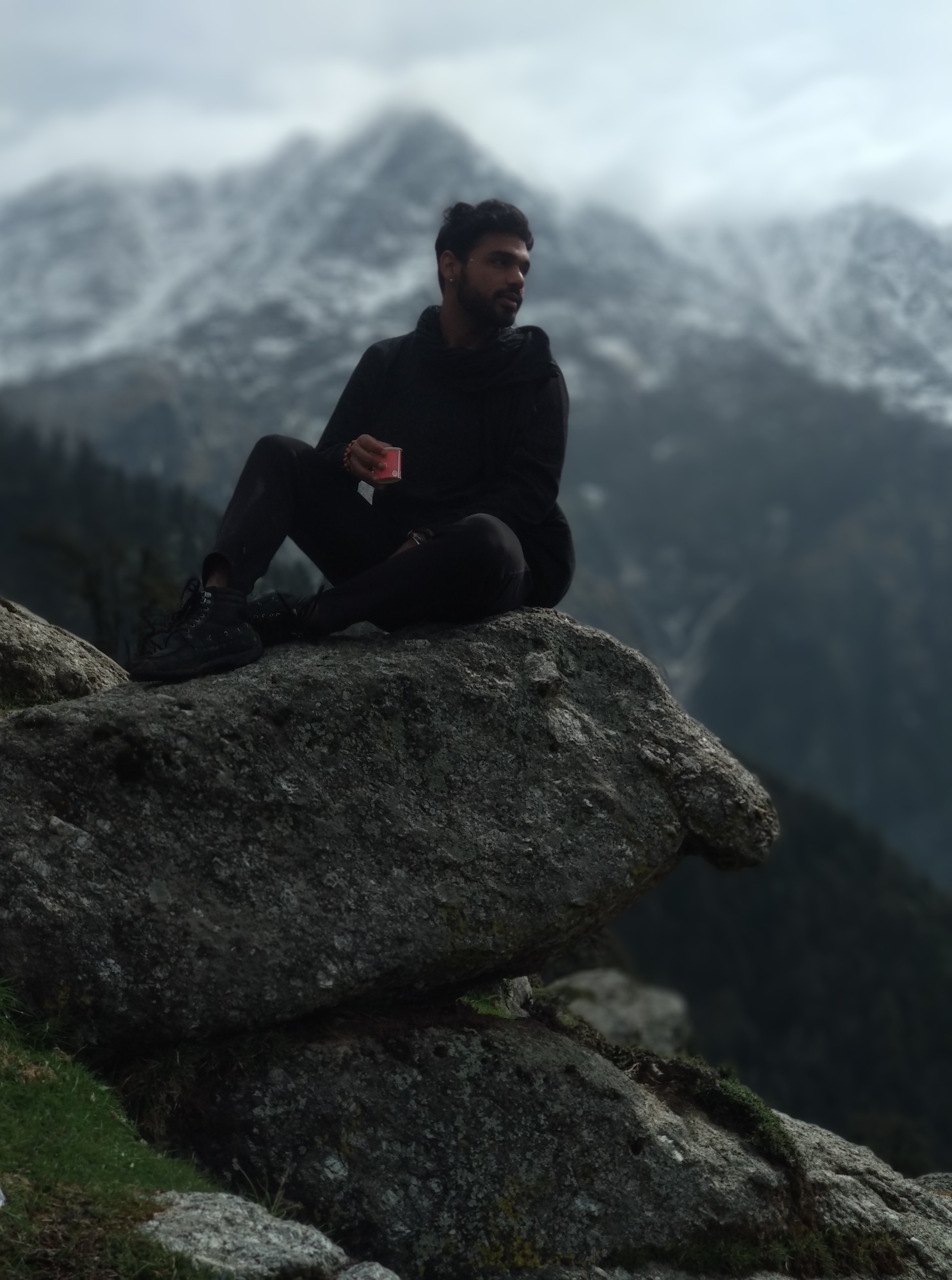
That walk felt different. It carried the weight of three years we had spent together—living in the same apartment, sharing routines, walking to university, cooking meals, ending each day with tea and deep conversations. Mystique, as always, spoke little, her soft Nepali accent carrying calmness. But she listened deeply, and I understood her even in silence.
As we walked, I told her how far she had come—how strong her abilities had become, how she was no longer affected by the energies of the mountains the way others were. She asked questions, and I answered what I could. We sat at a small tea stall as rain began to fall, eating Maggi and drinking hot tea—the simplest meal, yet perfect for that moment. Some conversations are too personal, too sacred to be written, and that was one of them.
When we returned, everyone was still deciding where to set up the camp. I chose a spot that felt right. Later that night, a storm and heavy rain came—but we were safe. That place had protected us.
We stayed there for a few days before returning to Punjab. But the journey had done more than just give us memories. It healed me. It healed all of us in some way. And most importantly, it brought us closer again.
Sometimes, it is not the rituals or the teachings that create magic—it is these moments, raw and real, where love, nature, and presence come together.
And that is where true healing begins.
Good byes..
Smita had become a regular part of our sessions by then, quietly observing, learning in her own way. And then, before we fully realized it, the last day arrived. The apartment had to be emptied. Our studies were complete, and life was calling each of us in different directions. There was no ritual for endings like this, no preparation that truly makes it easier.
Somewhere within, I knew I might not see Mystique again for a very long time—maybe never. That thought stayed with me, but I did not allow my emotions to take over. I held myself together, even though a quiet sadness lingered for days. It took time to settle, to accept that something so important had come to an end. But one thing I was certain of—the knowledge, the experiences, the depth we had reached together, would stay with us for the rest of our lives. No distance could take that away.
There was also a part of me that wanted more. A kind of longing, almost a greed—to spend a little more time together, to live those moments just a bit longer. But I also understood something deeper. Beyond the coven, they had their own journeys waiting. Their training, in a way, was complete. Now came the real test—the world outside, where there is no protected circle, no shared energy holding everything together.
It was their choice now. To continue the Wiccan path, or to step fully into the life that the world offers.
I could already see their directions forming. Raven wanted to focus on her career, to build something stable for herself. Mystique, in her own quiet way, longed for a family, for a different kind of life. And I understood—it is rare for someone to continue a path like this. It asks for discipline, sacrifice, and a kind of inner strength that not everyone chooses to carry forward.
Perhaps, if their attachment to the coven had been stronger, they might have stayed a little longer. But their curiosity for the world, for relationships, for freedom, was stronger—and that is not wrong. It is simply a different calling.
I never stopped them.
And whatever we had was never meant to be possessed. It was meant to be experienced, lived fully, and then released with grace.
A Year later.
Was I hurt? A little, perhaps. Not in a way that broke me, but enough to leave a quiet space within. I had made a decision—I would not initiate anyone into Wicca again. It demanded strength, discipline, and a level of commitment that very few could truly carry. What we had built was not something casual, and I had learned that not everyone was meant to walk that path fully.
A few months after the separation, I began to notice something. The Wicca we had lived, practiced, and embodied—it seemed to fade from them. I often wondered… was it their choice, or did that energy, that magick, somehow return to me? Perhaps life outside was heavier than expected. The world tests in ways that sacred spaces do not.
By 2019, I came across a few new students who were curious, willing to learn. I remained careful. I taught them Tarot, a bit of astrology, but I held back the deeper teachings—the ones that belonged only to those who had truly walked the path within the coven. Smita, however, stood out. Her curiosity had grown into something stronger—a genuine longing for the Cauldron, for the magick we once lived. Still, I wasn’t certain if she would stay, or if her path would eventually lead her elsewhere like the others.
In June 2019, I returned to the university for two months to complete a project. Walking back into that place after a year felt strange. Everything was familiar, yet empty. There was no Mystique, no Raven, no Anaad. The spaces were the same, but the presence was gone.

Smita was there too, working on her own project. On the first day, after everything was done, we met and spent a few hours at the same café where we had once gathered. But it had changed. The walls were being broken, renovated. It was more crowded, louder. A projector had been added, the curtains were new, the walls freshly painted, and the menu slightly different. Yet, despite all these additions, something essential was missing. The energy that once filled that space—the stillness, the depth—it had faded.
That evening, as I was about to leave the university, something within me paused. There was a pull, a quiet but strong urge to visit the sweet shop nearby—the one known for its samosas, barfi, and tea. I thought I’d just have a cup of tea and leave.
But as I stepped inside, I froze.
There he was—Anaad.
For a moment, I questioned my own eyes. He was supposed to have graduated two years ago. It didn’t make sense. Yet, he stood there, real, present. Our eyes met, and in that instant, there was a conversation without words. Something passed between us—recognition, familiarity, something deeper than logic.
From that day on, I began to see him often. He would come to the café, almost as if something had returned, as if time itself had folded back for a while. Smita would join me, and I continued sessions with her—just the two of us now—while Anaad would often be in the background, playing snooker, quietly present.
After almost five years, I finally spoke to him. Nothing extraordinary, no grand moment—just simple conversation. Yet, it felt natural, as if there had never been a gap. As if we had always known each other.
It made me wonder… was there a connection beyond this life? Something unfinished, something carried forward?
When my project came to an end, I saw him one last time. And this time, I knew—it was truly the last. There was no confusion, no doubt.
Some connections are not meant to stay. They appear, they stir something within you, and then they fade—leaving behind a question, a feeling, or perhaps just a quiet understanding.
Maybe, in another time… another world… another realm—
our paths will cross again.
By the end of 2019, I had lost touch with Raven, Mystique, and Hemanth. The connection that once felt so alive had slowly faded into silence. There were no conflicts, no endings spoken aloud—just distance, time, and life moving forward in its own way.
I had stepped into a new phase of life. I was working in a college, teaching medical students, guiding them through subjects that required logic and discipline—so different from the mystical world I had once lived in so deeply. Yet, in a strange way, both worlds existed within me. During the day, I was grounded in structure and responsibility. And beyond that, I continued my personal journey—learning Kathak, expressing myself through movement, rhythm, and tradition. Dance became another form of connection, another way of understanding energy, devotion, and the body as a vessel. I was also reading for people—those who came to me seeking answers, clarity, or simply comfort. Tarot, intuition, and insight became quiet tools through which I could still serve. But this time, I was more careful, more reserved. I no longer opened doors too easily. I had learned that not every seeker is ready, and not every connection is meant to go deep.

There was a certain solitude in this phase of life—but it was not empty. It was reflective. I had begun to understand that growth often requires distance from what once defined you. The coven, the sessions, the shared experiences—they had shaped me, but they were not meant to hold me forever.
And Then….
It is the spring of 2026. I now live on the west coast of Canada, where the ocean stretches endlessly on one side and mountains rise quietly on the other. There are days when I simply stand and watch them—the way their colors shift with the light, the way clouds move around them as if in conversation. In those moments, I am reminded of the Dhauladhar Range. Different land, different sky—yet something feels the same.
Smita has remained a constant presence—a quiet continuity of what once was the Bewitched Cauldron. Students still come, curious, eager to learn what they call the ancient art of Wicca. But I often pause and ask myself—are they truly ready? Are they willing to look beyond the surface, to face themselves, to step into higher realms not just with curiosity, but with courage? Because this path does not open itself to everyone. It asks something in return.
I never saw Anaad again. And perhaps that is how it was meant to be. Some people enter your life not to stay, but to awaken a part of you, and then disappear just as quietly. As for Raven, I sometimes wonder if she found the career she once dreamed of. And Mystique… if she found the life, the love, the world she carried so gently within her.
Do I miss them? Perhaps not in the way one would expect. What I miss is who I was in those four years. That version of me—raw, discovering, unshaped by the world. I have not lost him, but I have evolved him. Life changes you. The world demands adjustments. And somewhere along the way, you learn to balance who you were with who you are becoming.
I was told that the Cue Lounge café no longer exists. It was broken down, the land used for something else. Even the people who once worked there have moved on, scattered across countries. Sometimes I wonder—did that place exist only for us? Was it just a temporary space created for a chapter that needed to unfold?
If this sounds like an ending, it is not. Life does not offer perfect endings like stories do. There is no final scene where everything comes together. In reality, it would take only a few minutes for all of us to meet again—but it would require something far greater: strength, freedom, and above all, love. The kind of love that is not bound by fear, ego, or circumstance. The kind that dares.
Wicca, as I have come to understand, does not belong to everyone. It chooses those who are ready to live fully—to step out of the monotony, to break free from the endless cycle of survival, and to truly be. It calls those who are willing to love themselves deeply, without apology. Those who are willing to live, not just exist.
And I know where I belong.
I belong to those who are adventurous. Those who dare. Those who choose life in its fullest expression.
I helped them find themselves. I taught them to love who they are, without asking them to sacrifice their essence for the world. Because life does not demand the impossible—it only asks for honesty.
Now, I sit in solitude. In front of my altar—red roses resting quietly, my wand placed with care, crystals holding their silent energy, a bowl of water reflecting stillness. And in that reflection, I see myself.
The same.
Strong.
Confident.
Untamed.
Perhaps a little darker, a little wiser… and somewhere, quietly proud. The path I chose long ago—the path of Wicca—I still walk it.
And I know… the power watches. Not with judgment, but with a kind of quiet amusement.
As darkness settles and the mist begins to rise, I leave this here for now.
I will return to you, my reader… soon.


